The basics
Humanoid and legged robots: how they walk and keep their balance
Quadrupeds and humanoids walk over terrain no wheel can handle. Learn how legged robots balance, why their joints and feet matter, and what to check in their specifications.
Wheels are efficient on flat floors, but stairs, rubble, grass and cables stop them. Legs can step over obstacles and keep going, at the cost of much more complex control.
Staying upright
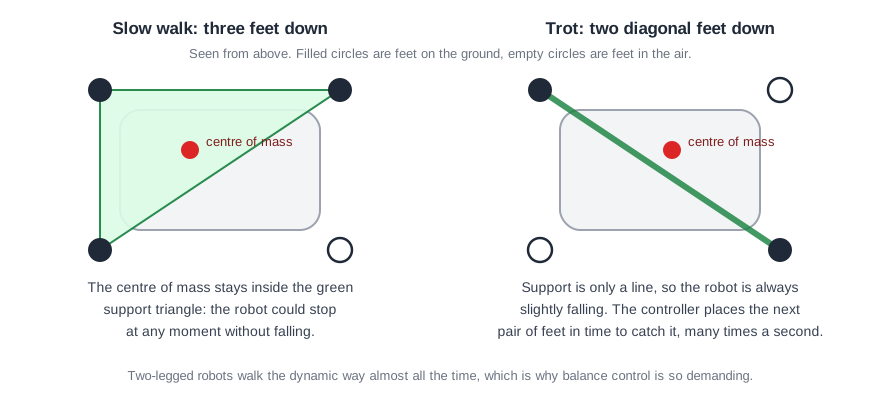
A walking robot is always about to fall. Its controller reads the IMU (tilt and rotation) and the joint encoders hundreds of times per second, estimates where its centre of mass is going, and places the next foot or shifts its weight to stay balanced. Early humanoids kept a conservative, flat-footed gait; modern robots use dynamic balance and controllers trained in simulation with reinforcement learning, which gives more natural and robust movement.
Quadrupeds
Four legs are naturally more stable than two. Quadrupeds from several makers are used for industrial inspection, research and security, often carrying LiDAR and cameras. Their legs typically have three motors each (hip, thigh and knee); wheel-leg versions add a driven wheel at each foot for speed on flat ground.
Humanoids
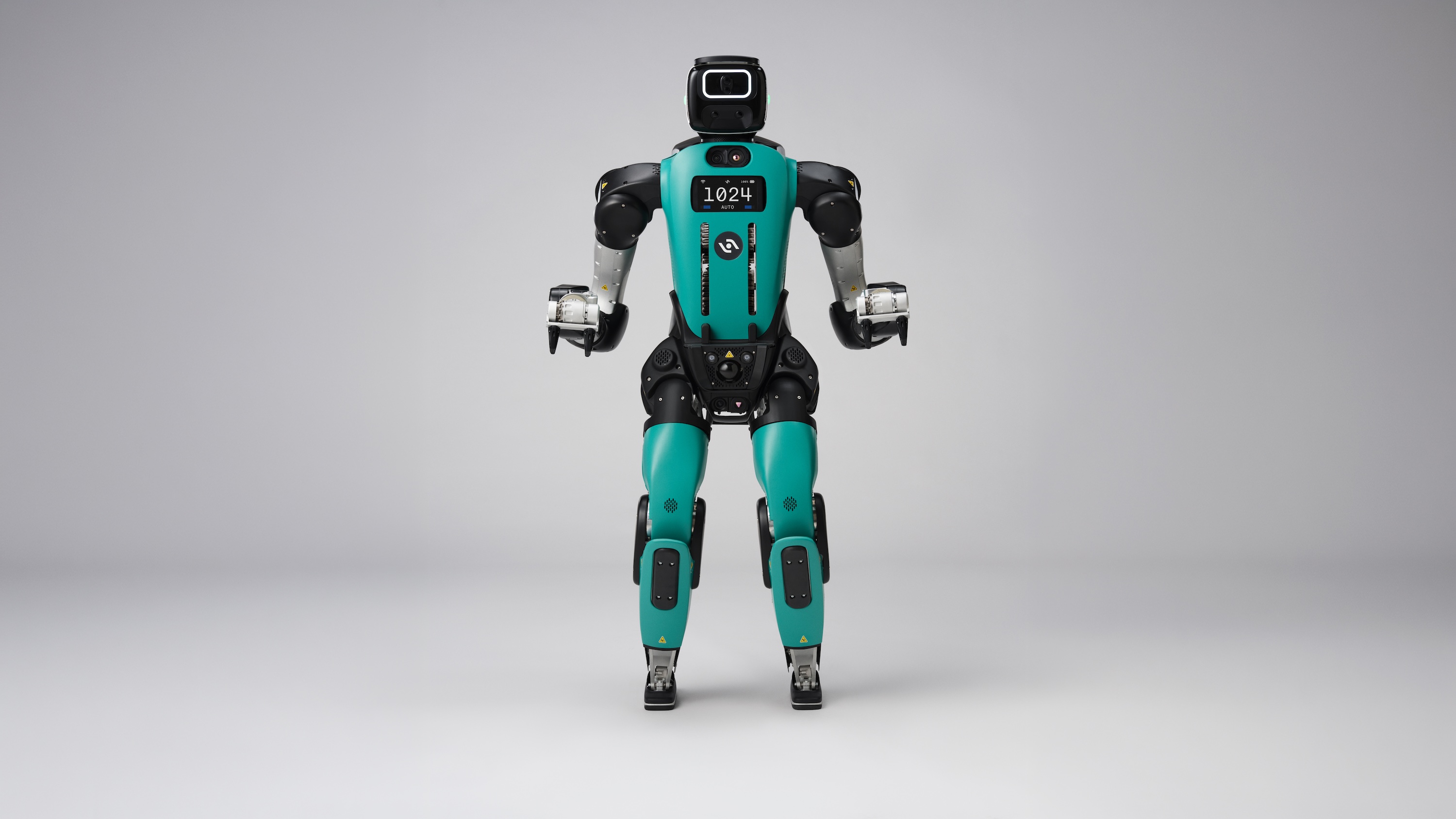
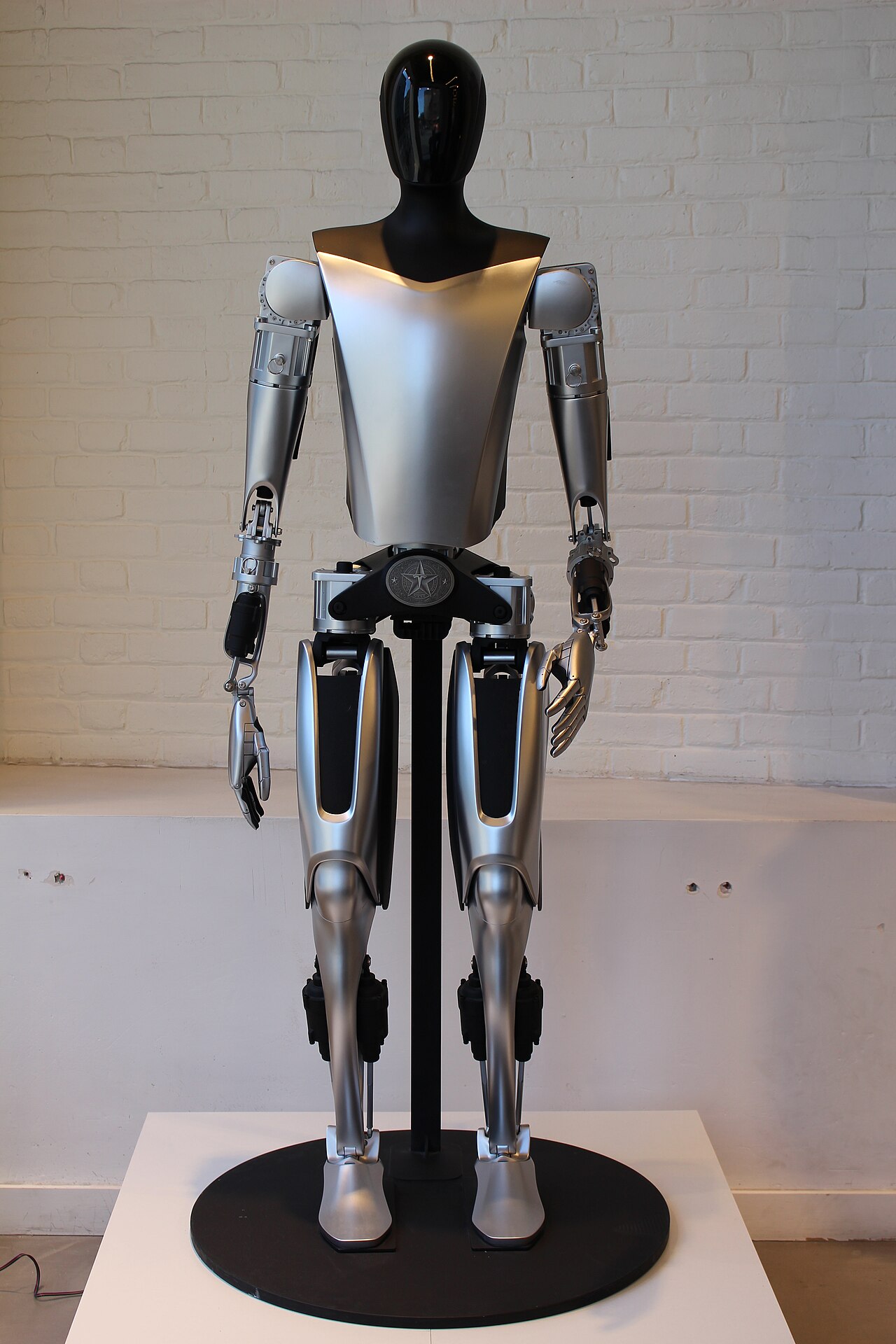
Humanoids aim to work in spaces built for people and use human tools. They need many more joints (arms, hands, waist and neck), which makes them heavier, more expensive and harder to control. Most of them are currently sold for research, education and pilot projects.
Joints and feet
Legged robots rely on high-torque, backdrivable actuators that survive impacts at every step (see inside a robot joint). Feet wear out and are a common spare part.
What to check
- Runtime and whether the battery is swappable.
- Payload and the terrain or stairs it is rated for.
- SDK access and whether low-level joint control is allowed (important for research).
- IP rating if it will work outdoors.
Compare humanoids and quadrupeds, and check the known issues reported by owners.