Movement: motors, reducers and grippers
Electric motors in robots: brushless, frameless and steppers
Almost every robot moves with electric motors. See how brushless DC motors work, why robots use frameless torque motors, and where stepper and brushed motors still appear.
Electric motors turn current into torque. Robots need motors that are light, efficient, controllable and able to produce high torque in short bursts, for example when a humanoid catches its balance.
Brushless DC (BLDC) motors
A brushless motor has permanent magnets on the rotor and copper windings on the stator. Instead of mechanical brushes, the motor driver switches the current between the windings electronically, using the rotor angle from an encoder or hall sensors. With no brushes to wear out, BLDC motors last long, run efficiently and can be controlled very precisely, which is why they dominate modern robots.
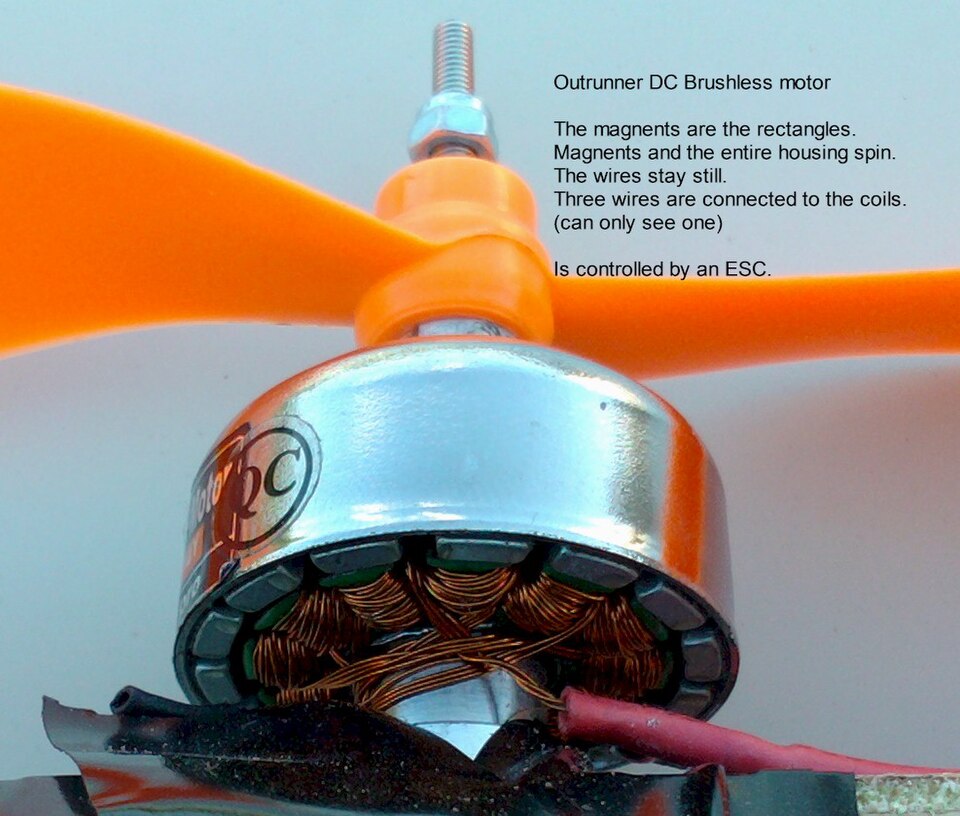
- Inrunner: the rotor spins inside the stator; compact and good at high speed.
- Outrunner: the rotor is an outer bell around the stator; larger diameter gives more torque, popular in legged-robot actuators and drones.
Frameless torque motors
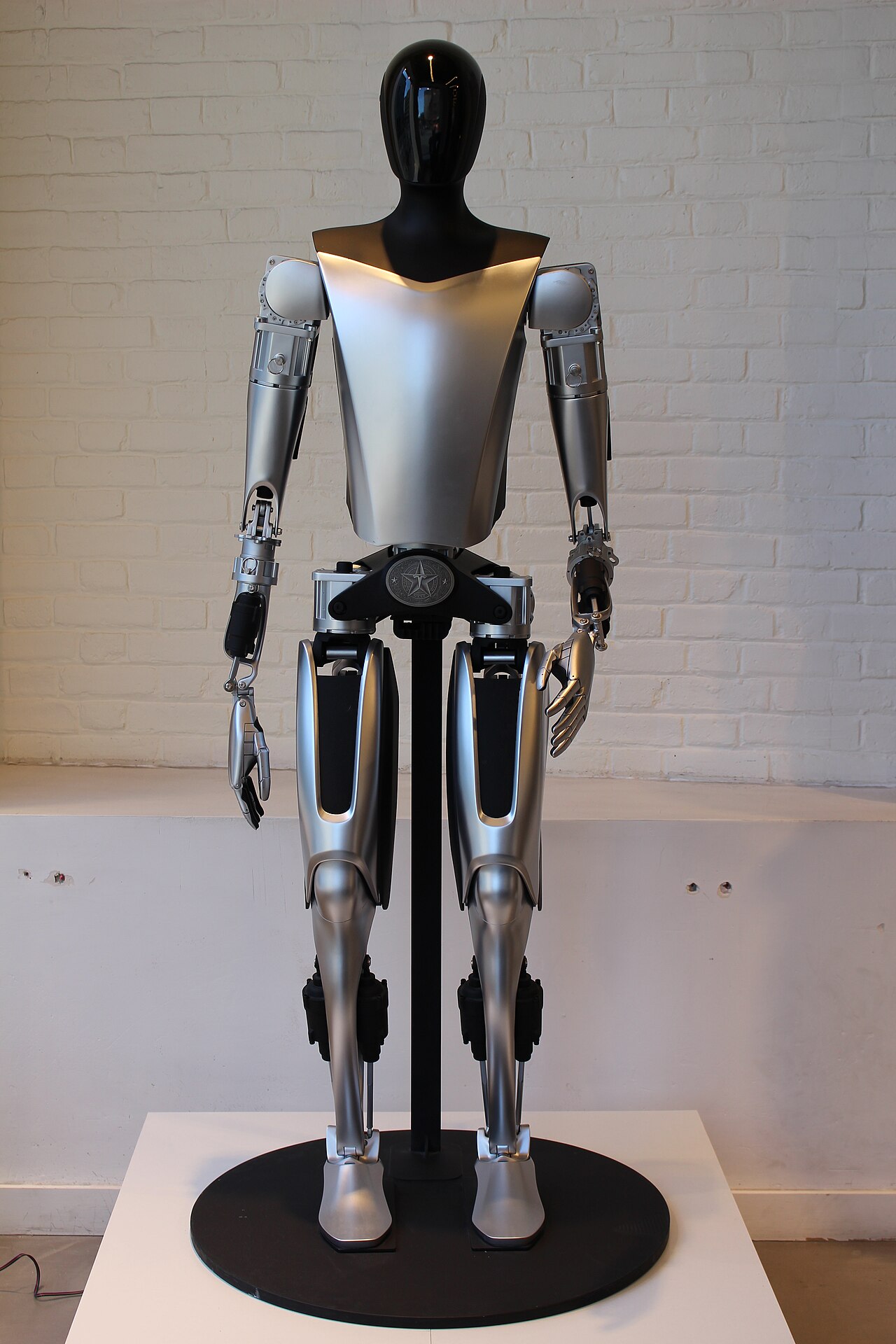
A frameless motor is sold as a separate rotor and stator without housing, shaft or bearings. The robot maker builds them directly into the joint, saving space and weight. Many cobot and humanoid joints use this approach, combined with a strain wave reducer and a hollow shaft for cables.
Stepper motors
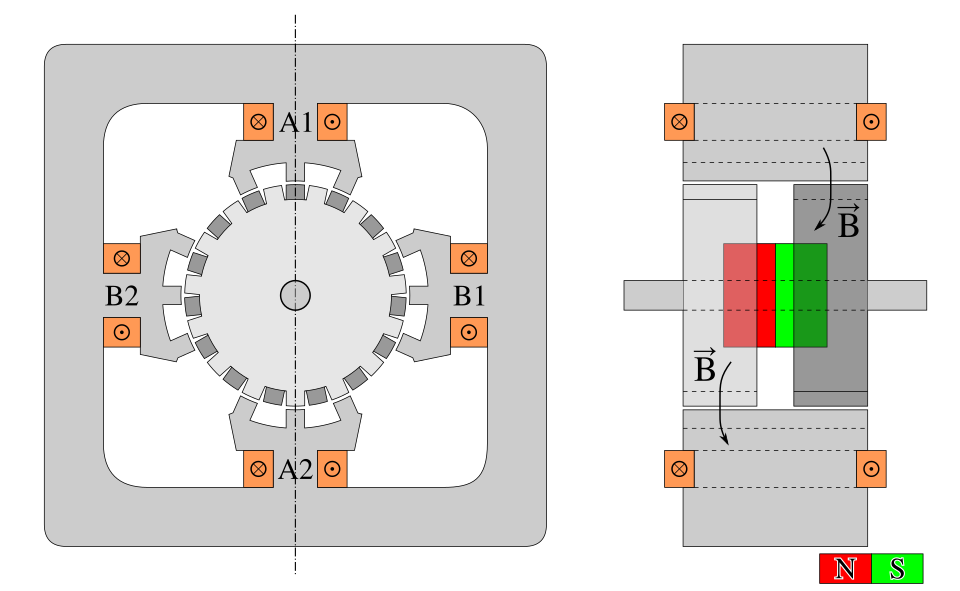
Steppers move in fixed steps and can hold a position without a position sensor, which keeps them cheap and simple. They are common in 3D printers, desktop arms and educational robots, but they are heavier and less efficient than brushless motors for the same torque and can lose steps under overload.
Brushed DC motors
Brushed motors are cheap and easy to drive, and still appear in toys, small grippers and low-cost wheeled robots. Their brushes wear, so they are rare in professional robots.
What to look at in a specification
Motor makers publish continuous and peak torque, speed, voltage and the torque constant. For a complete robot, those numbers matter less than the joint's output torque and speed after the reducer, and how long it can sustain them before overheating.
Browse motors and the component makers in the directory.