Software and AI
How robots talk: fieldbuses, I/O and networks
The wires and protocols that connect a robot to its motors, tools and the rest of the factory: EtherCAT, CAN, PROFINET, EtherNet/IP, Modbus, OPC UA and simple 24 V I/O.
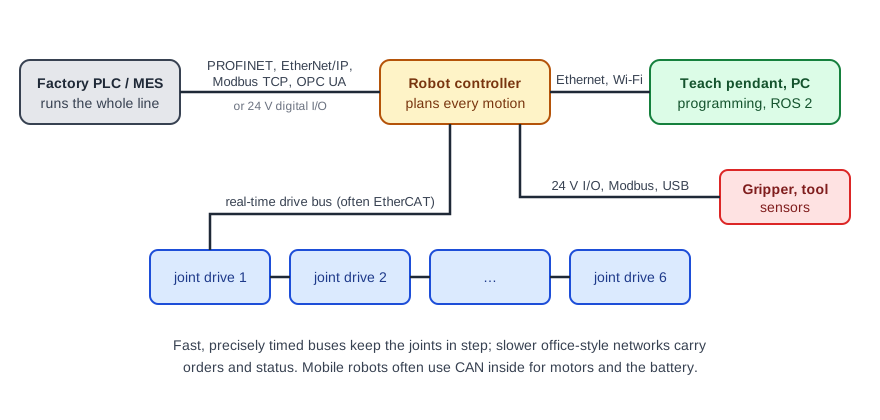
Inside a robot and around it, many devices need to exchange data: the controller and each joint, the gripper, safety sensors, the production line and the operator's screen. Different links are used for each job, depending on how fast and how precisely timed the data must be.
Inside the robot: real-time buses
To move smoothly, the controller sends new targets to every joint drive and reads back their positions in a fast, fixed cycle, all in lockstep. That needs a deterministic network, where each message arrives at a known time.
- EtherCAT uses standard Ethernet cables but a special protocol in which one frame passes through every drive in the chain. It is widely used for servo drives and in many robot arms.
- CAN bus (and CANopen on top of it) is an older, simpler bus found in vehicles, mobile robots, battery management systems and many compact actuators, including those of small legged robots.
These buses are normally hidden inside the robot; you only meet them when repairing it or building your own.
Connecting to the factory
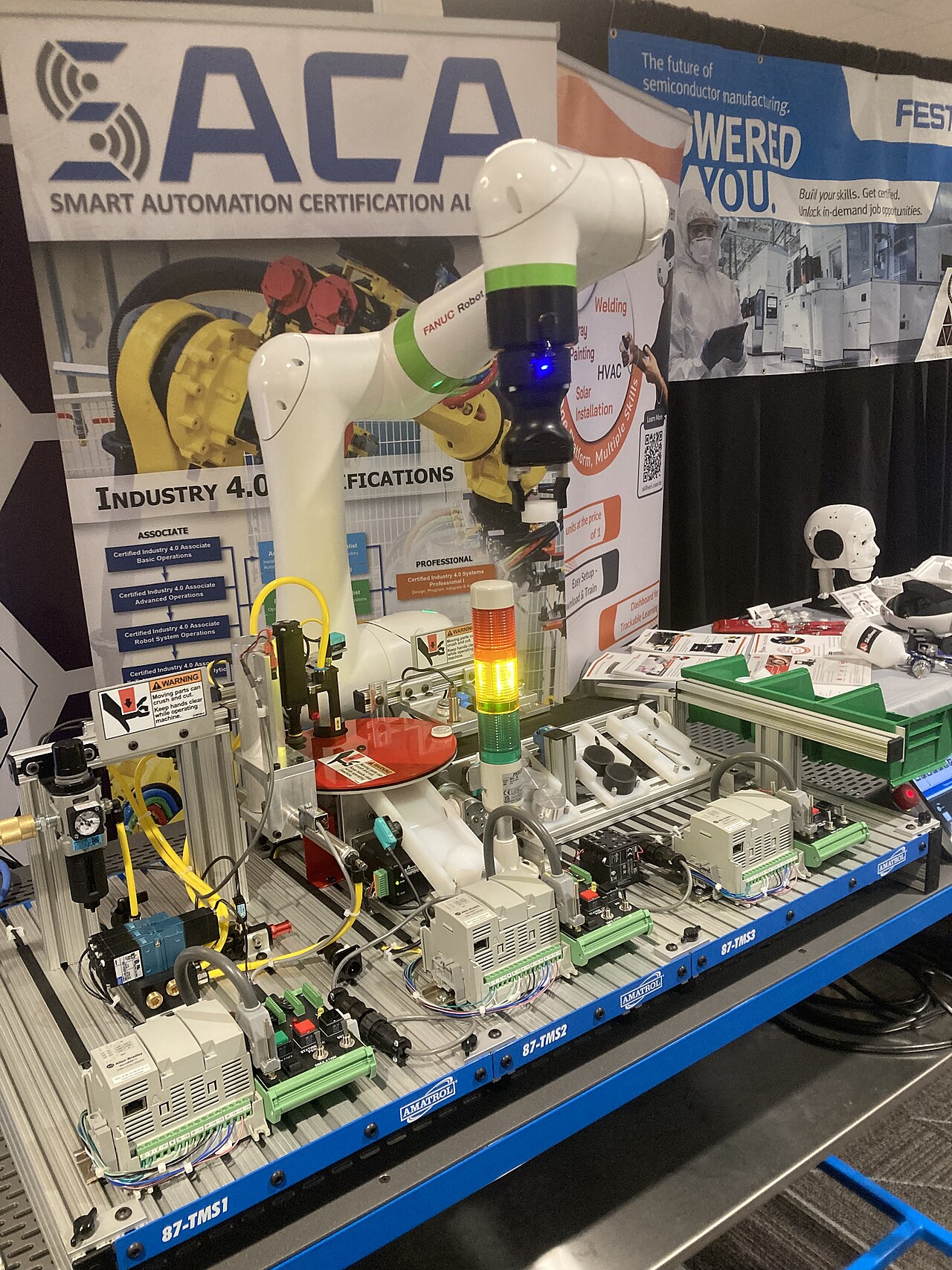
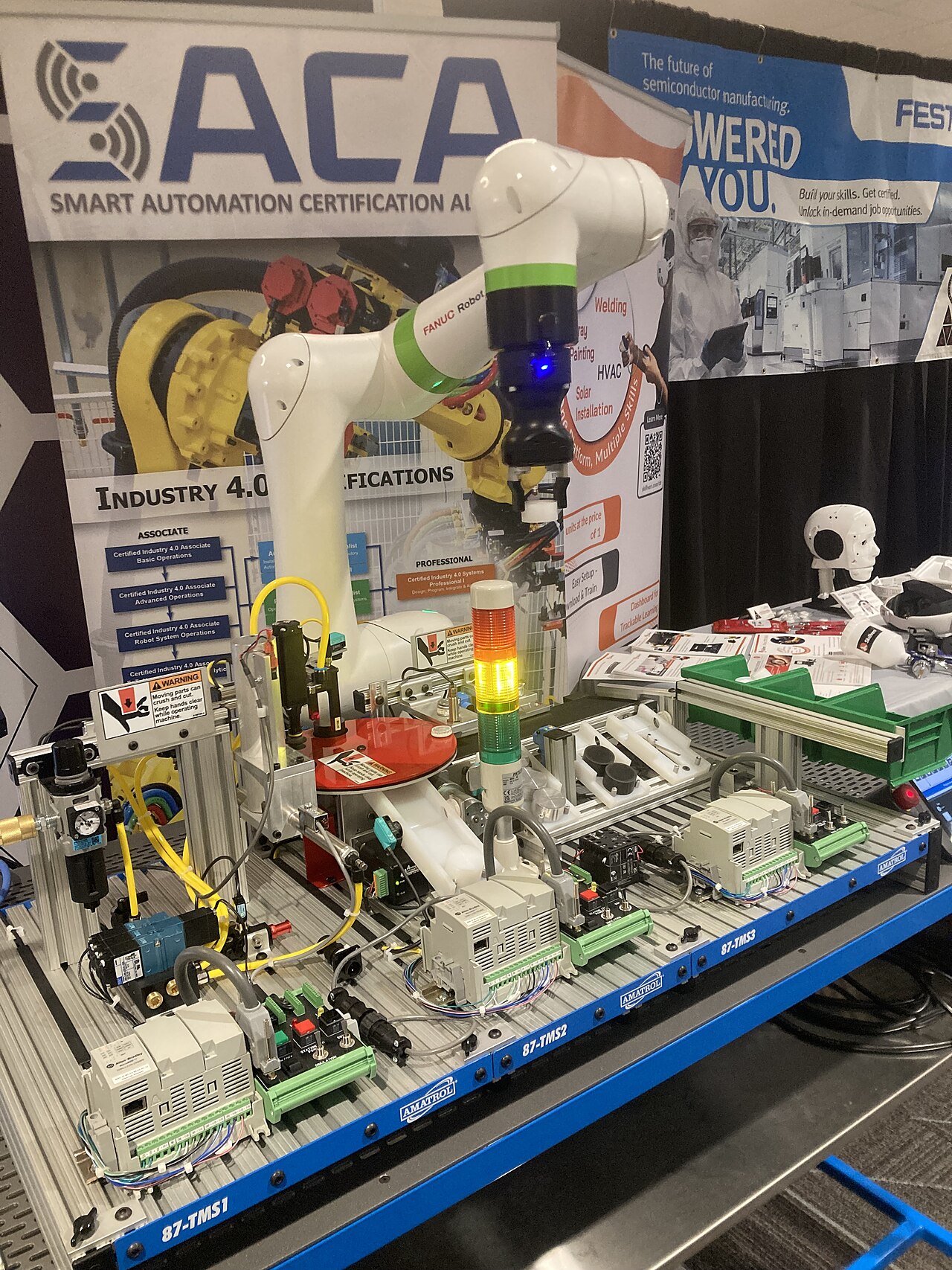
A robot in a production line must start when a part arrives and report when it is done. The line is usually run by a PLC, which talks to the robot controller using an industrial network:
- PROFINET is common with Siemens equipment and in much of Europe.
- EtherNet/IP is common with Rockwell (Allen-Bradley) equipment and in North America.
- Modbus TCP is simple, open and supported by most devices, though less capable.
- OPC UA carries richer information (states, alarms, production data) and is used for connecting machines to software systems rather than for fast control.
When buying a robot, check that its controller supports the network your line already uses; it is often an option or add-on module.
Simple digital I/O
Many connections are still single wires switched at 24 V: "gripper closed", "part present", "door open". Digital I/O is easy to wire and debug, and almost every controller and gripper has it. Safety signals such as emergency stops use dedicated, redundant safety inputs, never ordinary I/O.
Programming and fleet networks
Teach pendants, laptops and fleet software use ordinary Ethernet or Wi-Fi. Mobile robots rely on Wi-Fi to receive missions and send status. Robots that support ROS 2 exchange data using the DDS middleware, which also runs over normal networks.
Browse controllers and cables, or read about robot software and ROS.