Robotics news
Short summaries of what matters in robotics, each linking to its original source, plus our own interviews and features. Have a story?
Stories
Qualcomm will buy PickNik, maintainer of the widely used MoveIt manipulation framework for ROS; terms were not disclosed. Qualcomm says MoveIt will stay open source under its current license and keep supporting third-party hardware, while adding tighter integration with its Dragonwing platforms and Arduino VENTUNO Q boards.
· Robotics Tomorrow
Los Angeles startup Helicon Industries raised a $16 million seed round led by AlleyCorp to use robotics to handle flexible carbon fiber textiles, a step that remains largely manual. It aims to cut composite lead times from over six months to about two weeks from a 36,000 sq ft plant in Torrance, serving aerospace, defense and robotics customers.
· The Robot Report
Gripper maker Robotiq has released three open source packages on GitHub: a C++ SDK, a ROS 2 package that can replace the community driver, and NVIDIA Isaac Sim models with closed-loop kinematics. They form part of its Contact Core software layer for training manipulation models on Robotiq hardware, with embedded intelligence expected in Q4 2026.
· Robotics Tomorrow
Machine vision company Cognex will buy RealSense, the depth camera business spun out of Intel in 2025, for $500 million in cash, with closing expected in Q4 2026. RealSense sensors are used on robot arms, mobile robots, quadrupeds and humanoids, and the company expects $80 to 90 million in 2026 revenue. Its facial authentication unit will be split off.
· Robotics Tomorrow
NVIDIA has made Isaac ROS 5.0 available as free, open source software, adding support for ROS Lyrical on Ubuntu 24.04 and packaged skills that AI coding agents can use for setup, stereo model fine-tuning and pick-and-place. It runs across Jetson hardware from Orin Nano to Thor and speeds up FoundationPose object pose estimation by up to 5.5x.
· NVIDIA Blog
ABB Robotics has introduced E-Device, a compact safety unit with an emergency stop and enabling switch that lets operators run, program and monitor OmniCore robots and cobots from their own tablets or computers instead of a dedicated pendant. It complies with ISO 10218:2025, carries CE and UL marks, and aims to shorten training and commissioning.
· Robotics Tomorrow
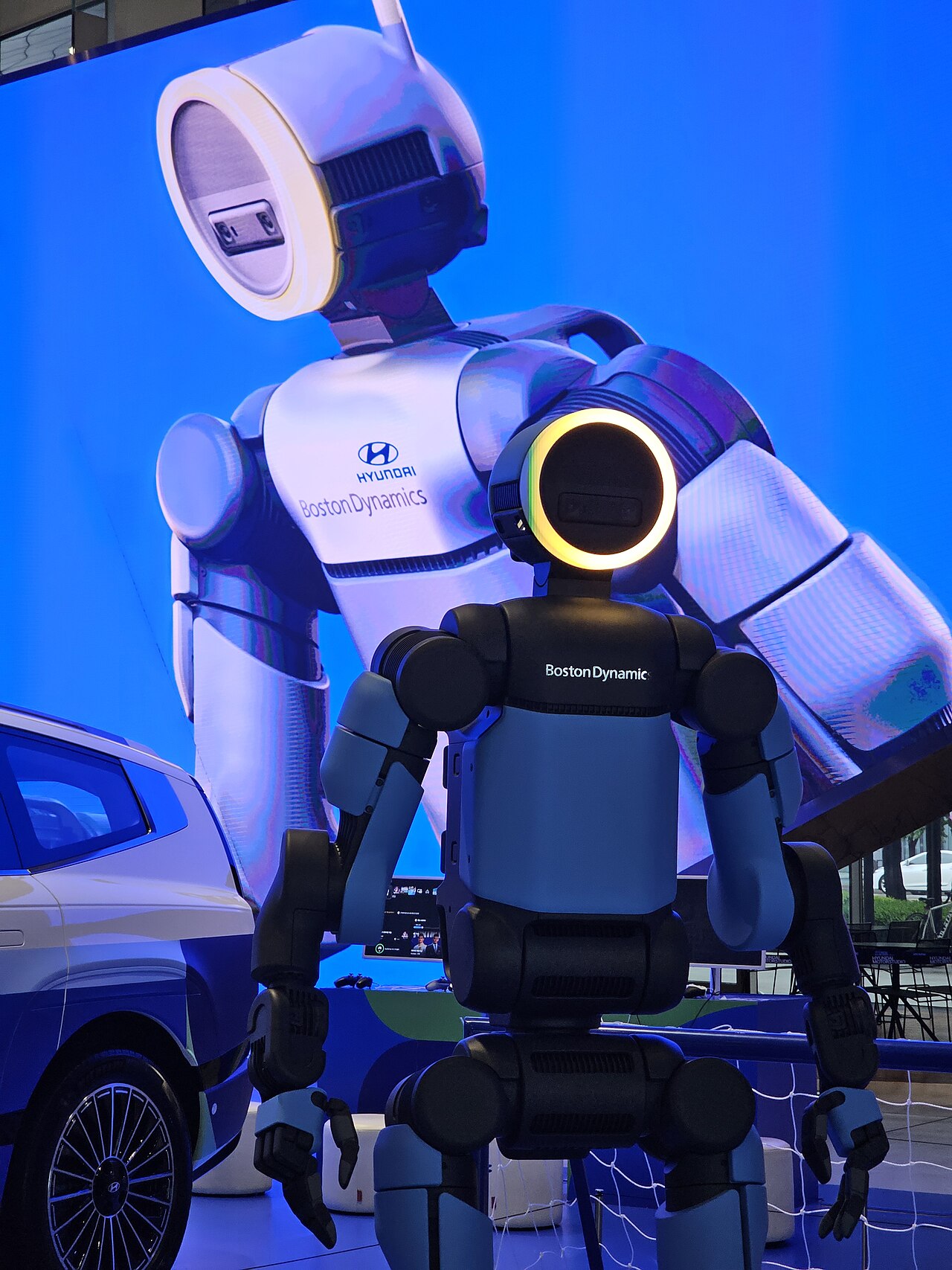
Boston Dynamics and Hyundai Motor Group have opened the Robotics Metaplant Application Center near Savannah, Georgia, where Atlas humanoids are trained on automotive work such as parts sequencing. The center is planned to grow roughly tenfold by 2027, as Hyundai prepares for 25,000 Atlas units across Hyundai and Kia plants.
· Robotics Tomorrow · Photo: Damian B Oh, CC BY-SA 4.0
Indian startup Pace Robotics says its Centa Painter, which applies putty, sands, primes and paints interior walls, has been on live construction sites since December 2025. It reports an order book of about 5 crore rupees within six months and repeat purchases from developers and contractors, with site workers operating the machines.
· Robotics Tomorrow
Simbe Robotics now has more than 3,000 Tally shelf-scanning robots under contract across over 75 retail banners in nearly a dozen countries. Tally checks stock levels, prices and product placement in stores, and Simbe says it is the only company with UL 3300 certification for a robot working in public spaces.
· Robotics Tomorrow
The US Federal Communications Commission granted ANSCER Robotics conditional approval under its Covered List rules for three of its mobile robots, the AR250, AR650 and AR1250, letting it continue imports and sales tied to supply chain security commitments. ANSCER and Husqvarna are among the first robot makers to receive this status.
· Robotics Tomorrow
Industrial parts supplier MISUMI has set up MISUMI Ventures in the San Francisco Bay Area, a $50 million fund that will write initial checks of $500,000 to $1.5 million in seed and Series A companies working on robotics, factory automation and industrial AI. Portfolio firms will get access to MISUMI's parts catalog and factory network.
· Robotics Tomorrow
MIT researchers led by Marin Soljacic built a reconfigurable lab where a seven-joint robot arm places mirrors, lenses and light sources, then adjusts them with micron-level accuracy. It assembled a working laser cavity in 50 moves within 30 minutes. The work, presented at IROS, could speed materials testing for solar cells and quantum devices.
· MIT News
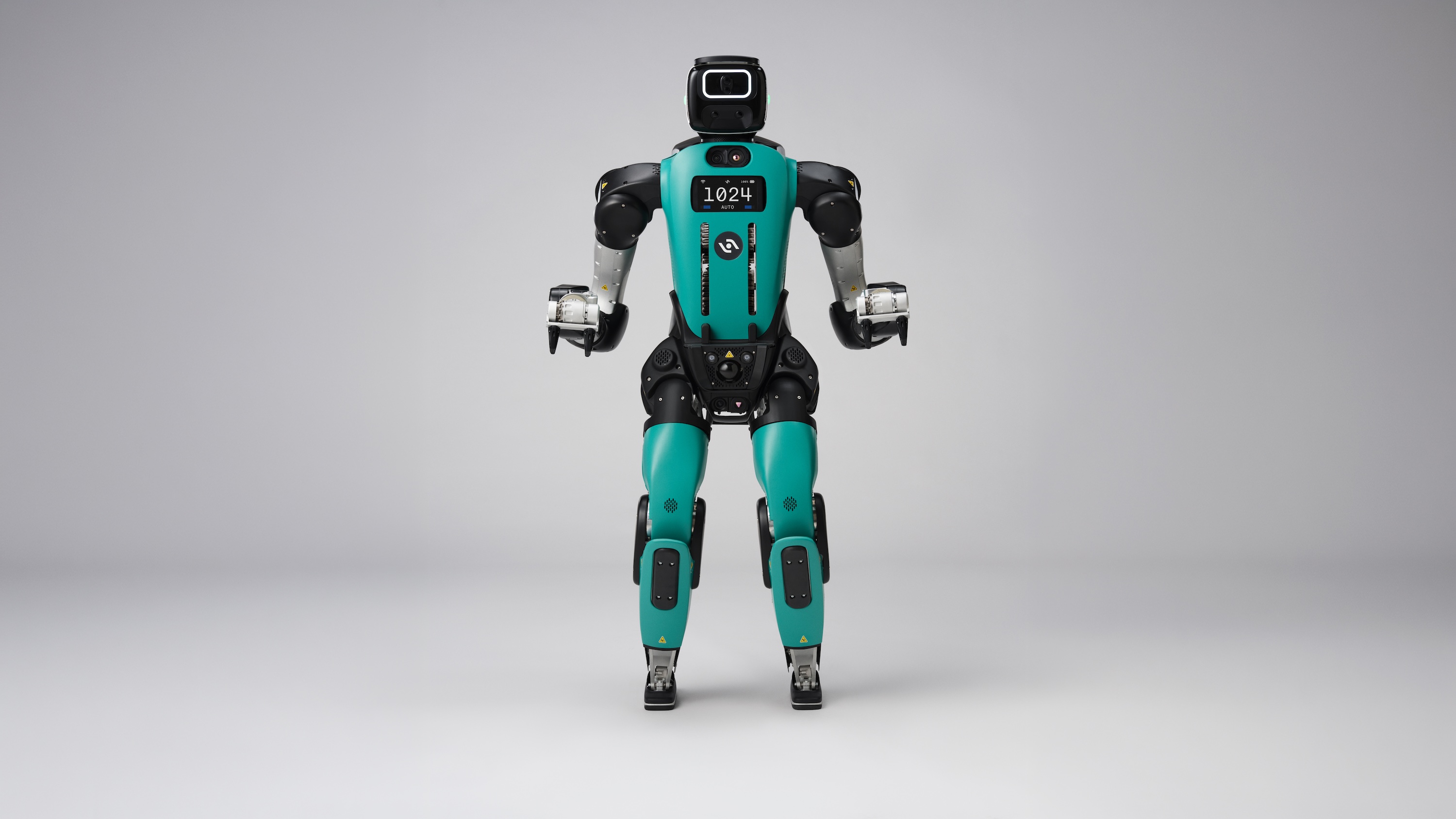
Agility Robotics is presenting Digit 5 as a humanoid built to share space with workers: it pauses, avoids hazards or sits down when people come close and is designed so it cannot fall onto them. The 129 kg robot lifts 23 kg to 2.1 m, has not yet been deployed in factories, and is expected in the EU and UK in 2027.
· IEEE Spectrum · Photo: Agility Robotics, Press photo
Skild AI has introduced S1, a robot foundation model that picks up new multistep tasks from a single video demonstration without retraining. The company reports about 66% success on unfamiliar tasks versus 9% for comparable systems, and says it is working with NVIDIA and Foxconn to use the technology in server assembly.
· NVIDIA Blog
Maven Robotics came out of stealth with a $100 million Series A backed by RoboStrategy, LocalGlobe, Vine Ventures and XTX Ventures. Its wheeled two-armed robots build mixed pallets in warehouses, lifting 30 kg each, and about eight units already run 16-hour days at customers. The company plans to build 250 third-generation robots.
· TechCrunch
Dutch company Vitestro received FDA authorization on August 19, 2026 for Aletta, a robot that locates veins with near-infrared, ultrasound and Doppler imaging before inserting the needle. In a Dutch trial with over 1,600 people it succeeded on the first attempt 94.5% of the time. A European launch is planned for 2027, with the US to follow.
· IEEE Spectrum
Researchers at the University of Queensland fitted giant burrowing cockroaches with electronics to steer them by remote control while they carry wireless cameras or spring-loaded injectors for disaster rescue. In tests they completed a 2.5-meter course in all 25 trials and hit injection targets 72% of the time, according to a paper in Advanced Science.
· IEEE Spectrum
In a Science Robotics study, 50 people talked with a Pepper robot that sometimes erred while being either animated or still. Mistakes cut trust in both cases, but brain imaging showed errors from the animated robot were processed more like social violations, and higher oxytocin predicted lower trust, a finding relevant to humanoid interface design.
· Robohub