Robotics news
Short summaries of what matters in robotics, each linking to its original source, plus our own interviews and features. Have a story?
Stories
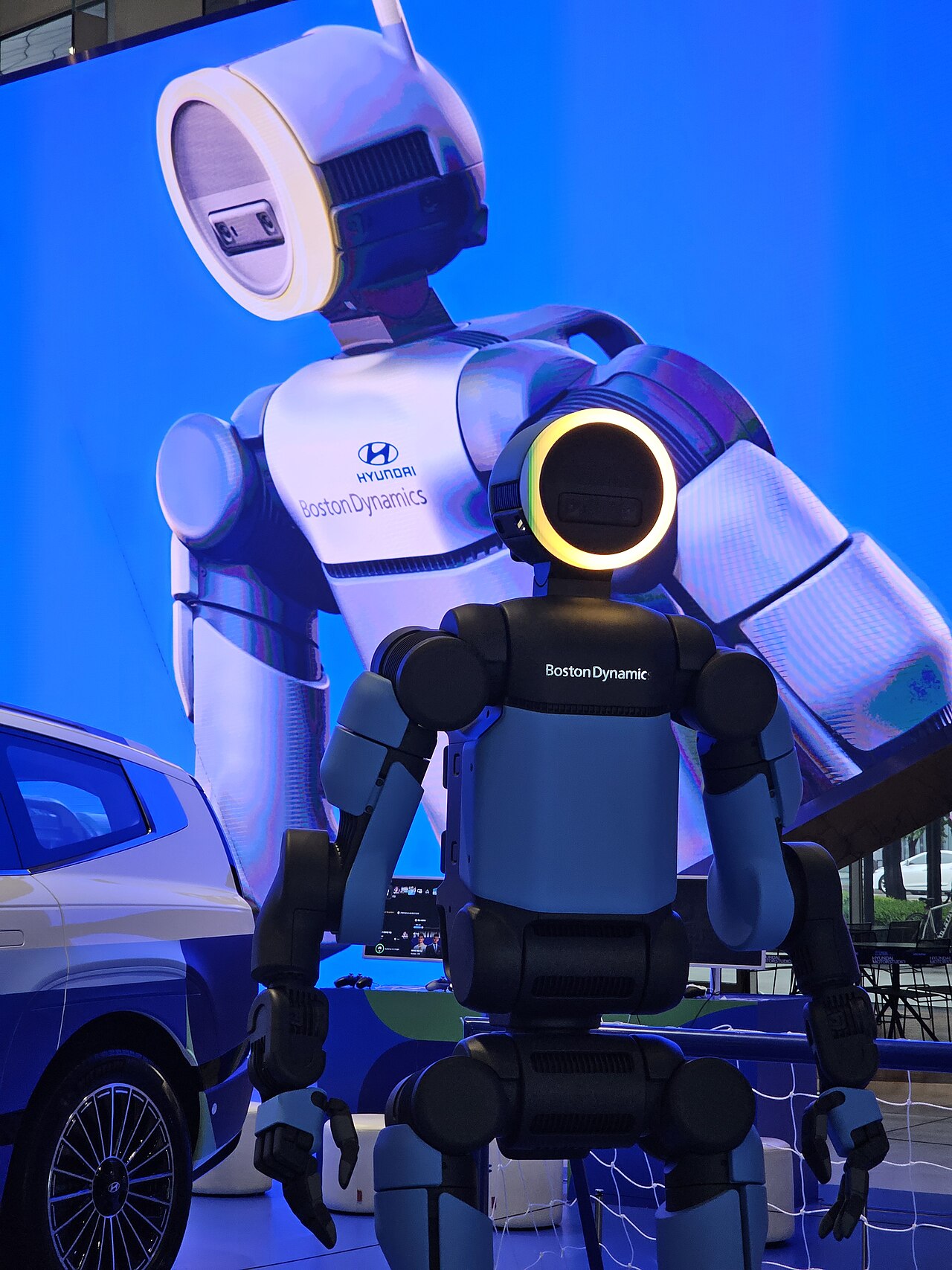
Boston Dynamics has detailed a new hand for its Atlas humanoid with four fingers, an opposable thumb and 13 degrees of freedom, up from 7 on the previous version. The team left out a little finger to save three actuators and their cost and failure risk; the hand has tactile sensors in the fingertips and palm and is meant for tool use and in-hand manipulation.
· Boston Dynamics · Photo: Damian B Oh, CC BY-SA 4.0
DH-Robotics presented two backdrivable, direct-drive hands at IROS 2026: the five-finger ADH-5-13 with 13 active degrees of freedom, 735 g and fingertip tactile sensing, and the three-finger UDH-3-7 with 7. They target embodied-AI research and teleoperation; no prices or delivery dates were given.
· Robotics Tomorrow
Honda is developing a system that pairs its multi-fingered robot hand with Redwire's STAARK arm and experiment lockers to handle sample retrieval and lab chores on future commercial space stations. The concept is still at the exploration stage, with talks planned with station developers to free up time for smaller crews.
· Robotics Tomorrow
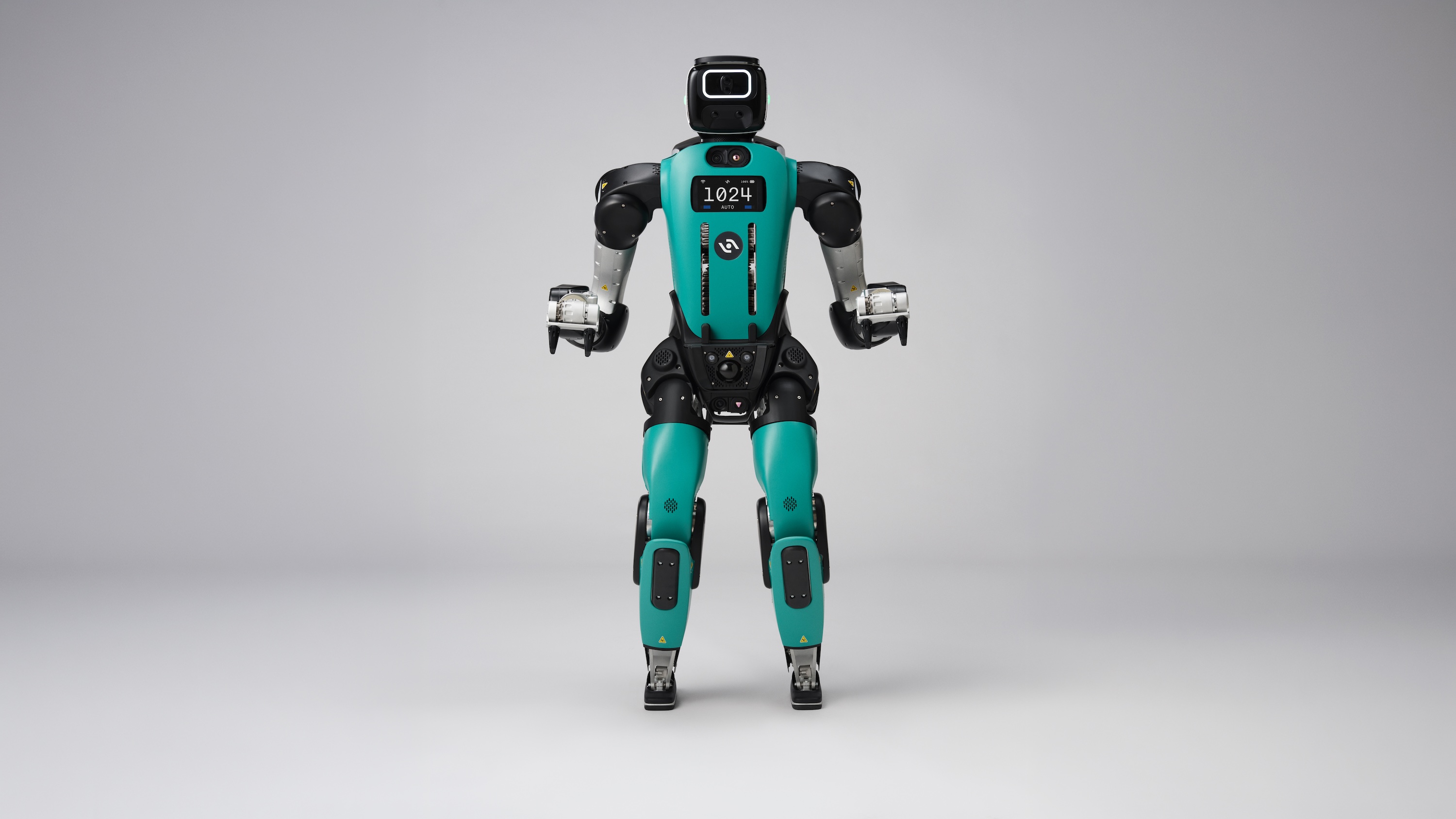
Agility Robotics and FORT Robotics have signed a memorandum of understanding to build safety infrastructure for Digit 5, including a pendant with emergency stop and enabling functions and a bridge to plant safety systems. The aim is to let the humanoid work near people at scale; earlier Digit versions have logged over 65,000 operating hours.
· Robotics Tomorrow · Photo: Agility Robotics, Press photo
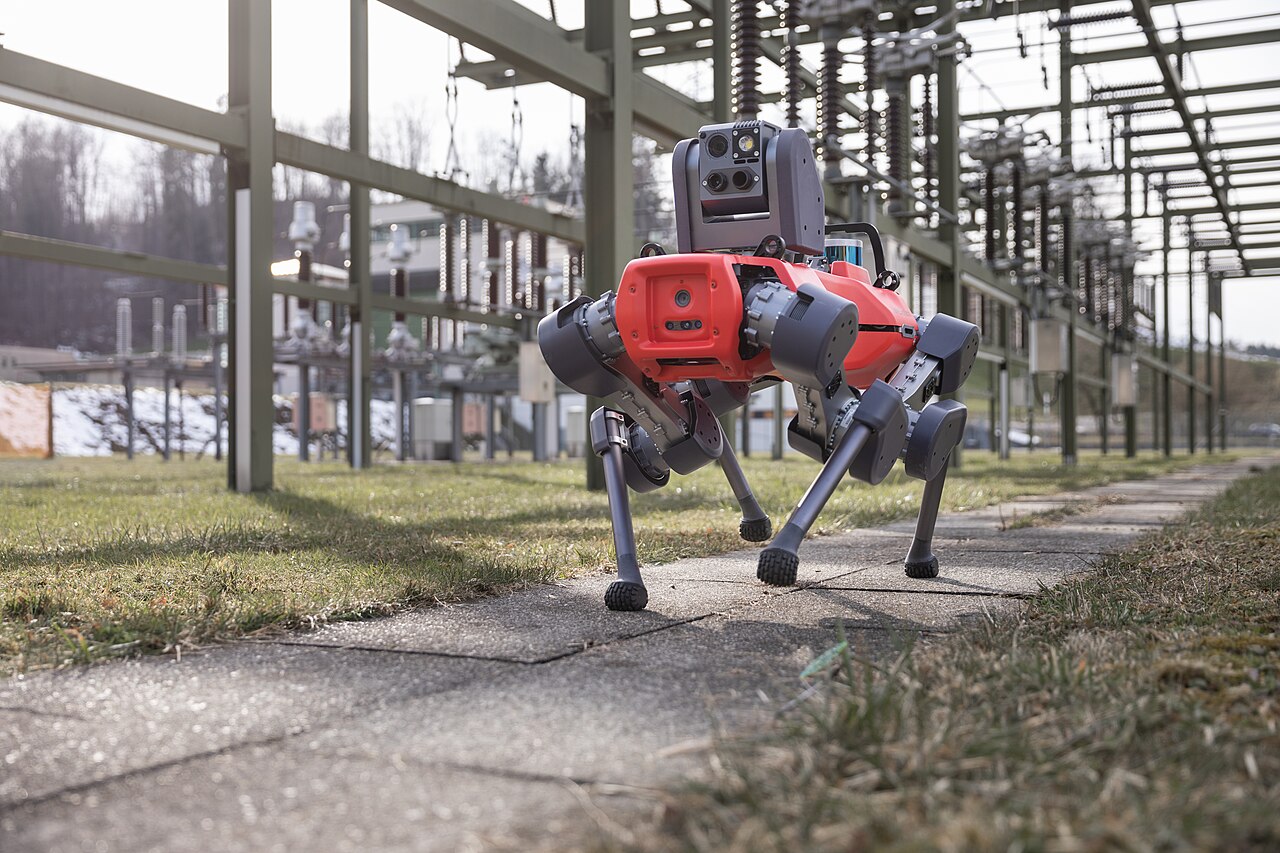
ANYbotics has made Shift 1.0 available worldwide to schedule and monitor ANYmal inspection fleets, flag anomalies from thermal, acoustic, visual and gas readings and turn them into maintenance work orders in tools such as SAP. The company cites more than 200 robot deployments carrying out hundreds of thousands of inspections a month.
· The Robot Report · Photo: Cvoellmy, CC BY-SA 4.0
The Association for Advancing Automation has released ANSI/A3 R15.08-3-2026, the third part of its industrial mobile robot safety series. It covers the user's side: risk assessment, change management, staff training and periodic inspections during daily operation, complementing Parts 1 and 2 on the robots and the systems built with them.
· Robotics Tomorrow
Destro AI has emerged from stealth with an $8 million seed round led by Base10 Partners and Bonfire Ventures. Its software uses vision-language-action models to control robots and plan work alongside people in cross-dock logistics; a pilot with Yusen Logistics is growing to 26 robots, with a 17-robot pilot starting at another US site.
· TechCrunch
Inbolt has raised $12.5 million led by Shift4Good, taking its total funding to $34 million. Its 3D camera and AI software let arms from makers such as FANUC, ABB, KUKA and Universal Robots adapt to parts in real time; it counts over 200 robots in more than 100 factories and plans to expand in the US, Asia and data centers.
· Robotics Tomorrow
Retailer LPP's logistics arm has widened its partnership with Geekplus across two Polish sites, now running over 1,600 autonomous robots, including RoboShuttle units, with about 1.4 million storage locations up to roughly 12 metres high. The rollout was phased to keep operations running, with staff moving to supervision and exception handling.
· Robotics Tomorrow
Data services company Innodata has opened a motion-capture facility in Ridgefield Park, New Jersey, that records human and robot movement with sub-millimetre optical tracking. Humanoid developers can buy the data, commission custom captures, retarget motion between platforms or send robots for independent performance and safety testing.
· The Robot Report
San Francisco and Paris startup Flourish has introduced Flourish One, a Raspberry Pi-based wheeled humanoid for household chores such as tidying and wiping tables. Owners teach it new tasks by moving their smartphone while the robot mirrors them, with training done on cloud GPUs. A first batch of 50 units is expected to ship before Christmas 2026.
· The Robot Report
An unnamed Fortune 100 heavy equipment manufacturer that already uses Cyngn DriveMod Tuggers has extended them to a second production workflow, moving components to an assembly line. The vehicles tow up to 12,000 pounds and navigate without magnetic tape or guide wires, a sign of repeat industrial demand for autonomous material handling.
· Robotics Tomorrow
DYNA Robotics has released DYNA 2.1, a semi-humanoid with a two-armed torso on four steerable wheels, already working in hotels, laundromats and restaurants. The company says it can run a full commercial laundry shift, from washers and dryers to folding and shelving towels, using its DYNA 2 model trained on one million hours of human and robot data.
· Robotics Tomorrow
A team led by Ritu Raman at MIT created a flat biohybrid robot whose two fins are powered by genetically engineered muscle that contracts under light, letting researchers steer it through a water maze. Published in Advanced Functional Materials, the work suggests thin designs could make biohybrid robots cheaper to build than bulkier 3D versions.
· MIT News
NVIDIA has introduced an Open Agent Safety Platform made of the OpenShell runtime and a Sentry watchdog design, and Gecko Robotics is among over 100 organizations using it. Gecko is adding a policy enforcement layer to its inspection robots, including the Komodo system deployed with the U.S. Navy, to limit what autonomous AI agents can do on physical machines.
· The Robot Report
Researchers from Stanford and Caltech put the GPT Astra model in direct control of a Unitree G1 humanoid, giving it a library of basic skills instead of a separate vision-language-action model. The robot mapped a kitchen with camera and lidar, built a digital twin, put items away on command and fetched medicine from a drawer without task-specific training data, though slowly.
· heise online
Shanghai-based ZS Robotics has brought its H125 four-way pallet shuttle to the Americas, a warehouse storage and retrieval vehicle with a 125 mm chassis, 13 safety sensors and CE, UL and CSA compliance. The company, which reports over 1,000 shuttles deployed worldwide, is also opening a demonstration and training space in Houston with partner Kingmore.
· Robotics Tomorrow
Edge AI chipmaker SiMa.ai closed a $150 million Series C co-led by Fidelity and Amplify, bringing total funding to $500 million. The company plans to use the money for its Palette Neat software and next-generation chips aimed at humanoid robots, drones and driver assistance, with new hardware rated at 1,000 dense TOPS due in the first half of 2028.
· Robotics Tomorrow
Researchers from EPFL and NYU built ScaFi, a tendon-driven robotic fish produced in three lengths from 0.6 m to 2.9 m that swims with the same motion at every size by changing only the tail rod diameter. Described in npj Robotics, the approach could simplify fielding quiet underwater robots that avoid disturbing sediment and wildlife, though energy efficiency across sizes remains an open problem.
· Robohub
French company Wandercraft has received FDA authorization to sell Eve, a personal self-balancing exoskeleton that lets adults with spinal cord injuries stand and walk using a joystick. The device uses twelve motors, runs up to four hours and is limited to flat indoor floors with a trained caregiver present. In a clinical study of 16 user and caregiver pairs, all completed the benchmark tests.
· New Atlas