Robotics news
Short summaries of what matters in robotics, each linking to its original source, plus our own interviews and features. Have a story?
Stories
Intel has petitioned the FCC for an expedited waiver so it can keep making hardware, software and firmware changes to the automated guided vehicles that move materials in its US chip plants. The vehicles are foreign-made, and the FCC barred new foreign advanced robotic devices in July. Intel says no domestic alternative exists and replacement would take years. The request is pending.
· DroneXL
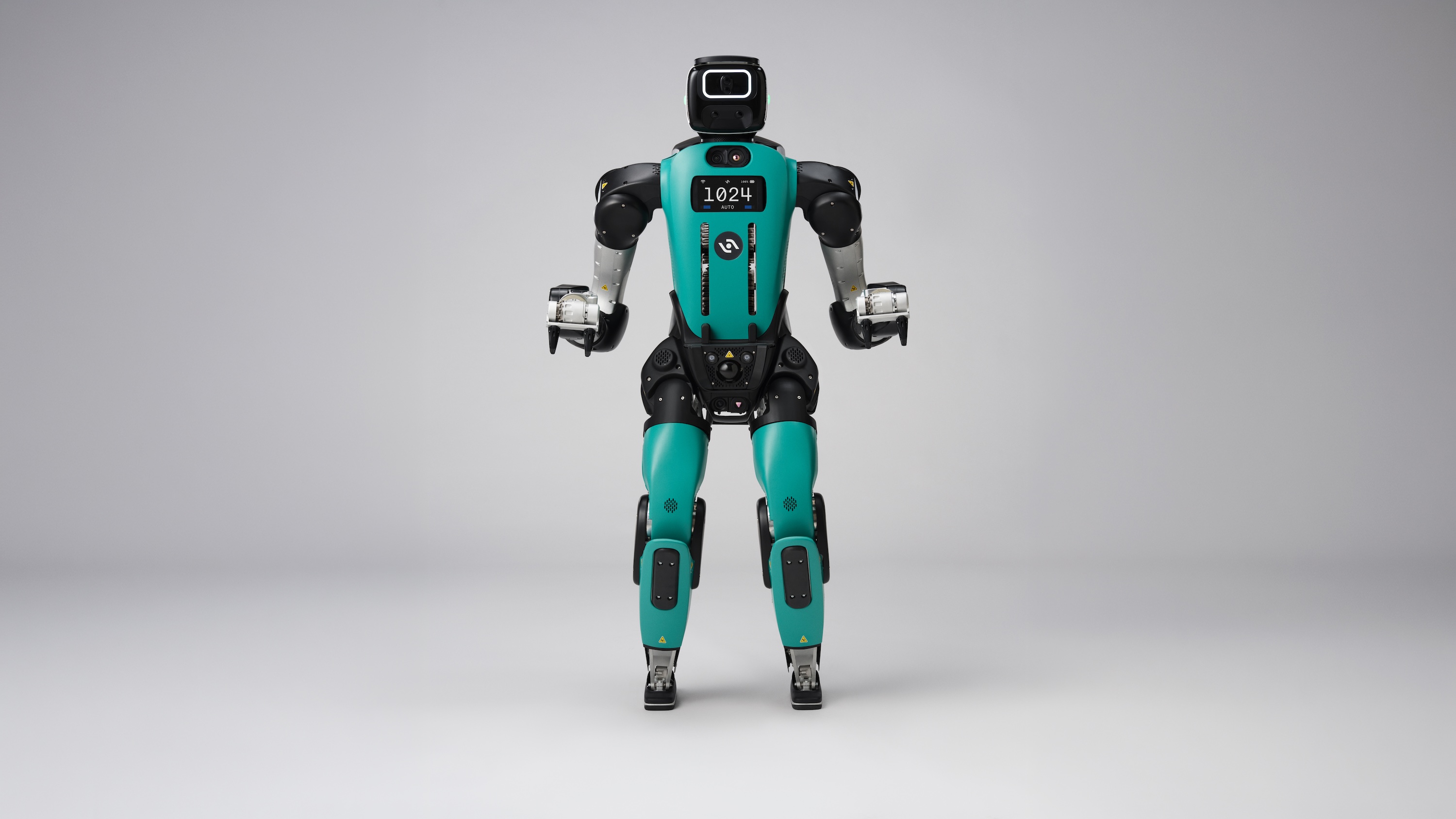
Farm equipment maker AGCO has reached a commercial agreement with Agility Robotics to trial the Digit humanoid at its Hesston, Kansas factory starting in 2027. Digit will first sort and stack parts and place totes into storage, taking on repetitive, physically demanding work, and can be run through Agility's Arc cloud fleet platform.
· Humanoid Robotics Technology · Photo: Agility Robotics, Press photo
Cleaning equipment maker Tennant has started taking orders for the P1 VAC, the company's debut self-driving vacuum robot and the opening model of a new P-Series. The compact robot vacuums and dust-mops soft floors, holds debris in a 10-litre two-part bin and is managed through a mobile app. Tennant plans 10 new products within 24 months and aims for a $250 million robotics business by 2028.
· Robotics Tomorrow
Eka Robotics, founded by MIT professor Pulkit Agrawal and former DeepMind researcher Tuomas Haarnoja, closed a $150 million Series A led by a16z and F-Prime. Its picking system pairs a force-sensitive gripper costing under $1,000 with a model trained largely in simulation, and the company says it handles about 1,500 objects an hour. It is running pilots with industrial customers.
· TechCrunch
Pittsburgh-based Gecko Robotics says it received an additional $300 million on its contract with the U.S. Navy and the General Services Administration, about six months after a $71 million initial award. Gecko uses wall-climbing robots, drones and sensors with AI analysis to inspect ships and submarines, aiming to cut maintenance delays and plan repairs before drydock.
· The Robot Report
Schaeffler has opened a roughly 7,500 m² plant in Taicang, China, where six humanoid robots at five stations assemble, test, label and pack linear and rotary actuators for other humanoids. The site also has a training and data-collection centre and a digital twin, so robots can learn tasks from Schaeffler's roughly 100 production sites and try them on the line.
· heise online
Figure AI ran its third-generation Figure 03 humanoid on an ordinary fitness treadmill for nine days, covering roughly 348 miles (about 560 km) in some 1.2 million steps while tethered to external power. CEO Brett Adcock said the test was meant to expose faults caused by repetitive motion; the company has not said whether any failures occurred.
· heise online
Kodama Systems, based in Sonora, California, closed a $7 million round co-led by Konvoy Ventures and Breakwater Ventures, bringing its total funding to $14 million. The startup pairs teleoperation with supervised autonomy on logging skidders and says its systems moved over 100,000 tons of timber in the past six months; the money will fund commercial deployments and deeper OEM partnerships.
· The Robot Report
KUKA has launched iiQKA.AI Vision, image processing software that lets integrators set up bin picking, assembly, quality inspection and depalletizing with drag-and-drop templates. It runs on the edge on KUKA's AI Extension Platform with an NVIDIA Jetson Orin module, keeping images on the device without a cloud connection.
· Robotics Tomorrow
Samsung Medical Center showed a two-armed humanoid robot that mirrors a surgeon's movements to pass instruments, hold an endoscope and retract tissue in a simulated operating room. It is being built by the ORchestra consortium, which includes Rainbow Robotics, under a Korean ARPA-H project funded with KRW 13.835 billion through 2029; clinical trials and regulatory approval are still required.
· Humanoid Robotics Technology
Researchers at TU Delft's MAVLab described in Science Robotics how their autonomous MonoRace drone won the 2025 Abu Dhabi Autonomous Drone Racing Competition, defeating world champion Yuki Hashimoto in the final. It flew at up to 100 km/h with only an 8-megapixel camera, an inertial sensor and a neural network trained in simulation, without GPS or external tracking.
· t3n
AiMOGA Robotics, part of the Chery group, plans to unveil Mobo, its first consumer humanoid robot for the home, on October 21 in Wuhu, China, and open global pre-orders the same day. The robot offers voice interaction, object recognition, reminders and long-term memory through the company's MoAgent system; price and technical specifications have not been announced.
· Humanoid Robotics Technology
A Northeastern University student, working as an intern at Fleet Robotics, refined a waterproof robot that grips steel hulls with switchable electromagnets in its feet and brushes away marine growth while walking autonomously. Several units can coordinate and recharge at docking stations; the system has been tested on a ship at the Woods Hole Oceanographic Institution.
· heise online
Researchers at the Singapore University of Technology and Design have built ALBATROSS, a robot dropped from aircraft to monitor remote waters. Two rigid wingsails autorotate like a maple seed to slow its fall, then act as sails once it rights itself, with a fish-tail rudder steering between waypoints. In trials a prototype dropped from 150 metres landed intact and a larger version sailed about three hours on a Singapore reservoir; the work appears in Science Robotics.
· New Atlas
Engineers at UCLA and the University of Michigan built an 11 cm, 98.2 g robot whose two rear limbs are helical Nitinol rods that servos twist until they suddenly flip shape and launch it forward. Across six surfaces it averaged 2.46 body lengths per second, against 0.79 for a rigid-legged version, and it can also swim, climb small steps and steer. The work, published in Science Advances, targets inspection and search-and-rescue in cluttered sites.
· New Atlas
RoboParty, founded in Shanghai in 2025, has launched RP1, a humanoid of about 1.3 meters with 24 actuated degrees of freedom, plus a Pro version with 30. The company is publishing the mechanical design, actuator resources, drivers, control code, firmware and simulation tools, so labs can modify the robot and test their own algorithms on real hardware.
· Robotics Tomorrow
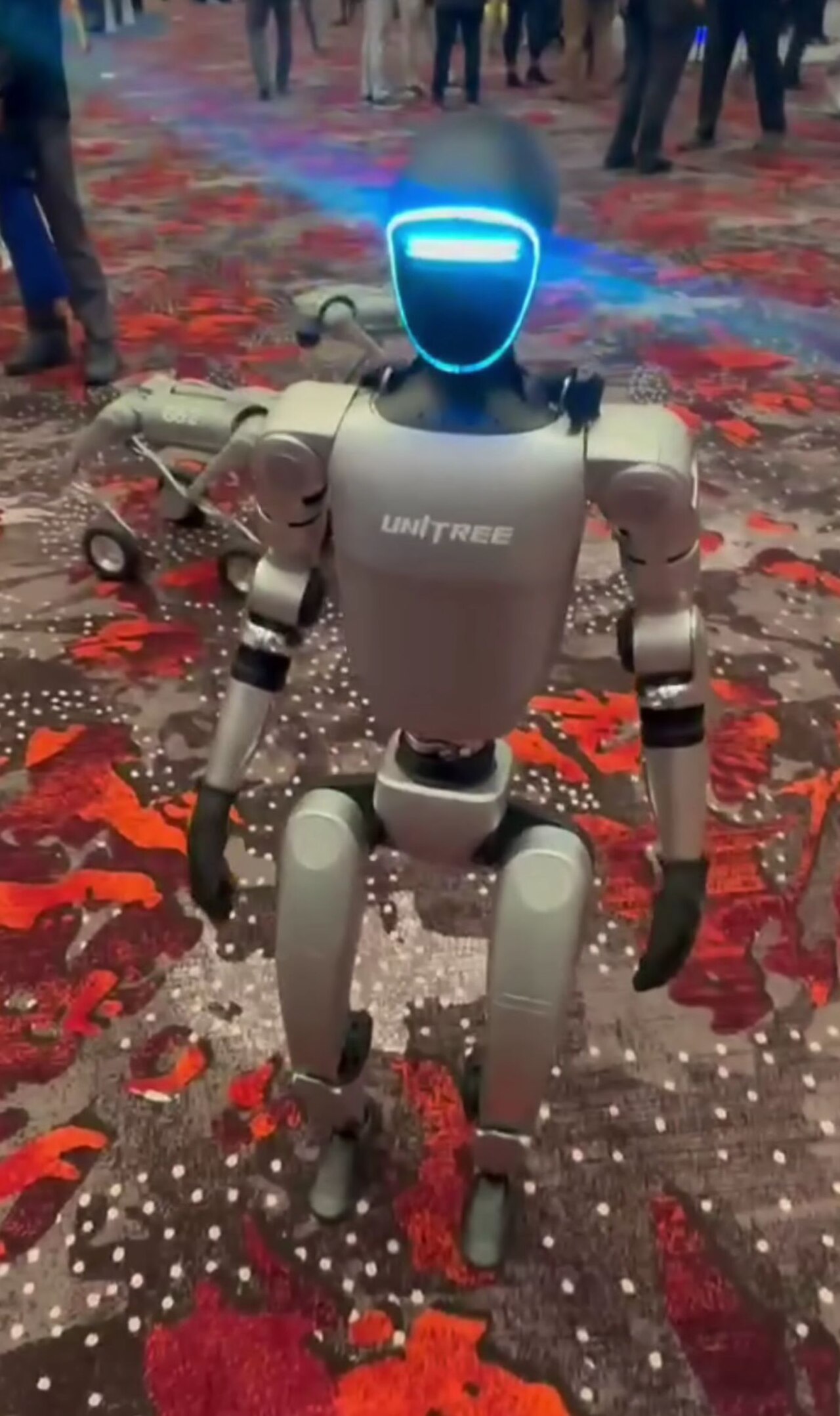
Unitree has introduced UniUni, software for quickly choreographing the movements and formations of groups of its robots. According to the company, the system also tracks the status of each device in real time and includes safety braking.
· Unitree (YouTube) · Photo: Sayanesy, CC0
Stryker has put roughly $400 million into UK-based CMR Surgical and secured an exclusive option to buy the rest of the company. Under the deal, Stryker becomes the sole US sales agent for the Versius surgical robot range, while CMR keeps commercial control in other markets. The transaction still needs regulatory approval.
· The Robot Report
Agility Robotics will use fast-charging battery technology from UK firm Nyobolt in its Digit 5 humanoid. The company says a 9-minute charge gives 90 minutes of work, a 10:1 run-to-charge ratio versus 2:1 on Digit 4, so the robot can operate more than 20 hours a day. Early access is expected in the first half of 2027.
· The Robot Report · Photo: Agility Robotics, Press photo
DJI has released Dock 4, its first drone-in-a-box station that replaces the aircraft's battery automatically in 25 seconds instead of recharging it between flights. It pairs with the new Matrice 5TD, rated for up to 59 minutes of flight, with LiDAR, mmWave radar and onboard detection of 17 object types, for inspection, security and emergency work.
· Robotics Tomorrow