Robotics news
Short summaries of what matters in robotics, each linking to its original source, plus our own interviews and features. Have a story?
Stories
Two lawsuits filed by Chicago residents allege that Coco Robotics and Serve Robotics delivery robots captured biometric data such as faces and bodies with their cameras and lidar without consent. Coco called its suit frivolous and denies collecting biometric data in Chicago, while Serve says its systems are not built to identify people and it will defend itself. The claims are unproven allegations.
· Futurism
KAIST researchers built BeetleBot, a robot modelled on an African beetle that walks and grips with 3D-printed liquid crystal elastomer muscles that contract about 45% when heated. An operator steers it with a bend sensor worn on a finger while a camera streams its view back. In lab tests it turned, grabbed an object and carried it elsewhere, pointing to inspection of tight spaces.
· New Atlas
Researchers at North Carolina State University have built a soft underwater robot modeled on the feather star, using elastic limbs driven by only two actuators. It can rise, hover, swim forward or backward and spin in place, where a conventional design would need at least six actuators. The team sees uses in underwater exploration, carrying cameras and lifting objects.
· New Atlas
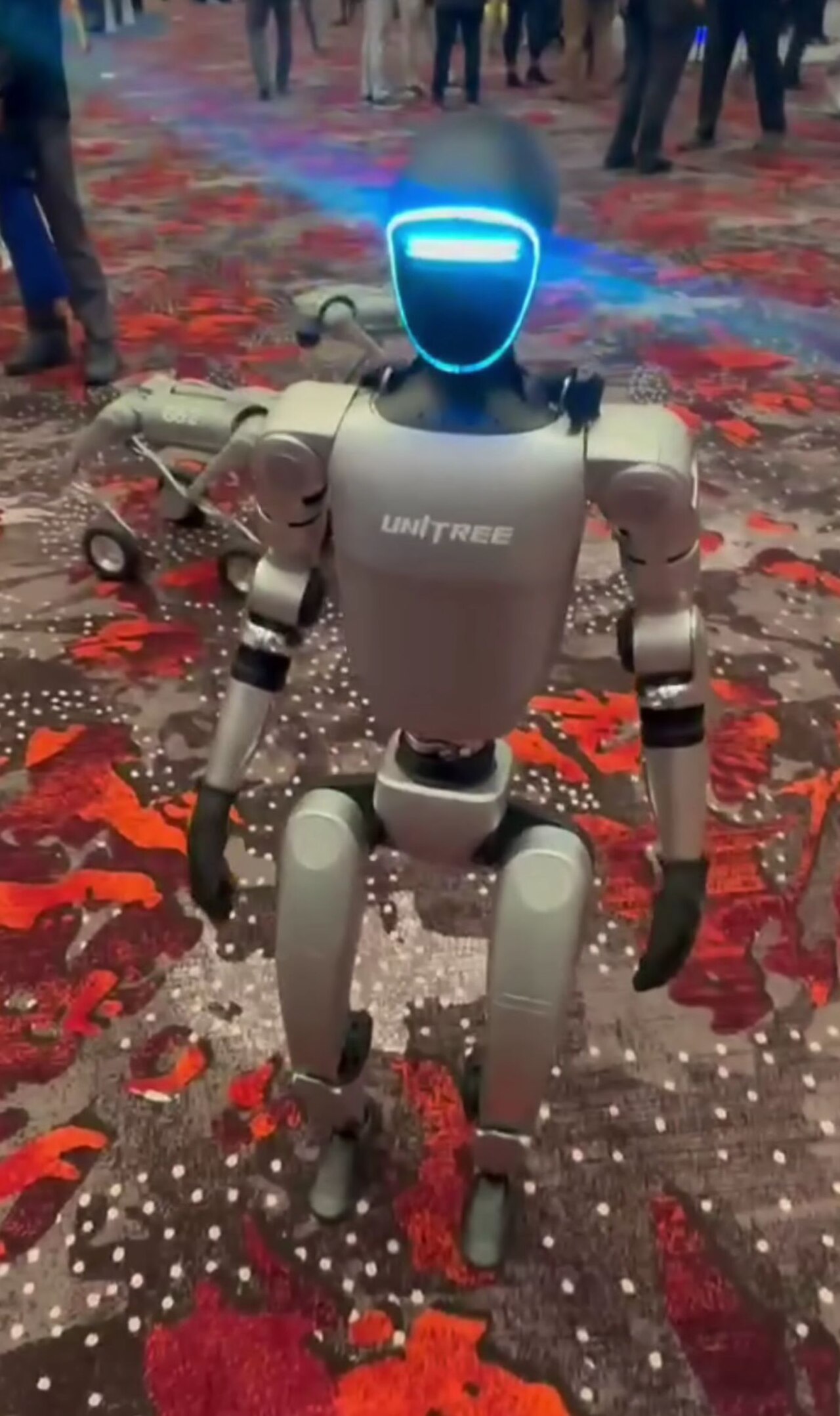
At its physical AI conference in Hangzhou, Unitree founder Wang Xingxing presented Rehearsal, a system in which AI agents review research, write control code, test it in simulation and check the best results on real robots. Unitree calls the approach a priority to speed up skill development, though it remains a proof of concept with no published results.
· Xataka · Photo: Sayanesy, CC0
ETH Zurich's Soft Robotics Lab has made 1.5 cm actuators that pair mouse-derived skeletal muscle tissue with light-printed hydrogel scaffolds, designed in simulation for maximum movement. Reported in Nature Communications, they jump, swim, grasp and walk at 6.2 mm/s, but still need a nutrient bath to stay alive.
· Robotics & Automation News
Google DeepMind showed its new Gemini 4 Argon model watching a video of a person playing cornhole, building a simulation of the task and passing the learned motion to Apptronik's Apollo humanoid, which then landed seven throws in a row. Google says the video-to-simulation pipeline can shrink weeks of manual setup to a few hours.
· Robotics & Automation News
Stockholm-based 120ft has come out of stealth with €576,000 from 22 angel investors to build factories made of three 40-foot containers where humanoid robots assemble, inspect and pack goods. Consumer brands would pay per finished product for local, small-batch production instead of buying robots or relying on long supply chains.
· Robotics & Automation News
Former OpenAI science lead Kevin Weil has launched Warp Sciences, which raised $215 million at an $865 million valuation in a round led by Lightspeed. Chemists wearing cameras and sensor gloves will teach robots to synthesize and test compounds around the clock, work that biotech firms often outsource abroad.
· TechCrunch
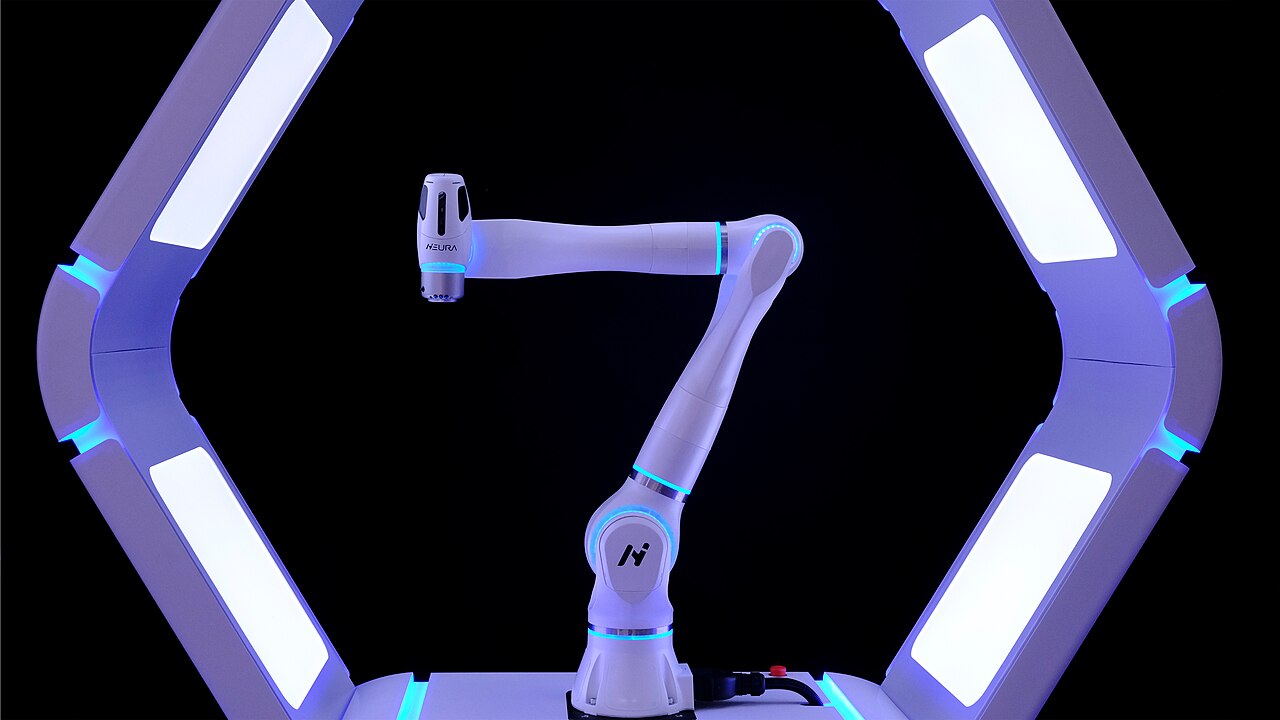
NEURA Robotics and TUM, Munich's technical university, opened a robot training center of more than 2,300 m² near Munich Airport, a three-year project worth about €17 million where companies from over ten industries teach robots real tasks. NEURA also showed the fourth-generation 4NE1, which is 20% lighter, has a textile skin and new hands, and is being readied for series production.
· Humanoid Robotics Technology · Photo: Anna Schneider2021, CC BY-SA 4.0
Existing investors led by Tiger Global, with Mark Cuban Companies taking part, committed roughly $20 million to FORT Robotics, which builds safety systems for robots and autonomous machines. The Philadelphia company, with over 19,500 units deployed, plans to go public through a merger with Newbury Street II Acquisition Corp under the ticker FROB.
· Robotics Tomorrow
Dream Labs closed a $90 million seed round led by B Capital and Kindred Ventures and launched a public API that turns a robot's camera feed and plain-English instructions into motor commands. The company says its Dream-1 model, trained on videos of everyday human tasks, runs on robots from different makers costing about $2,000 to $10,000.
· The Robot Report
The Federal Railroad Administration picked the City of Columbia for a $16.2 million grant that will put two of Intramotev's TugVolt self-driving railcars on the 21.4-mile Columbia Terminal Railroad. Service starts with remote switching and is meant to grow into autonomous freight runs along the whole line, including public crossings.
· Robotics & Automation News
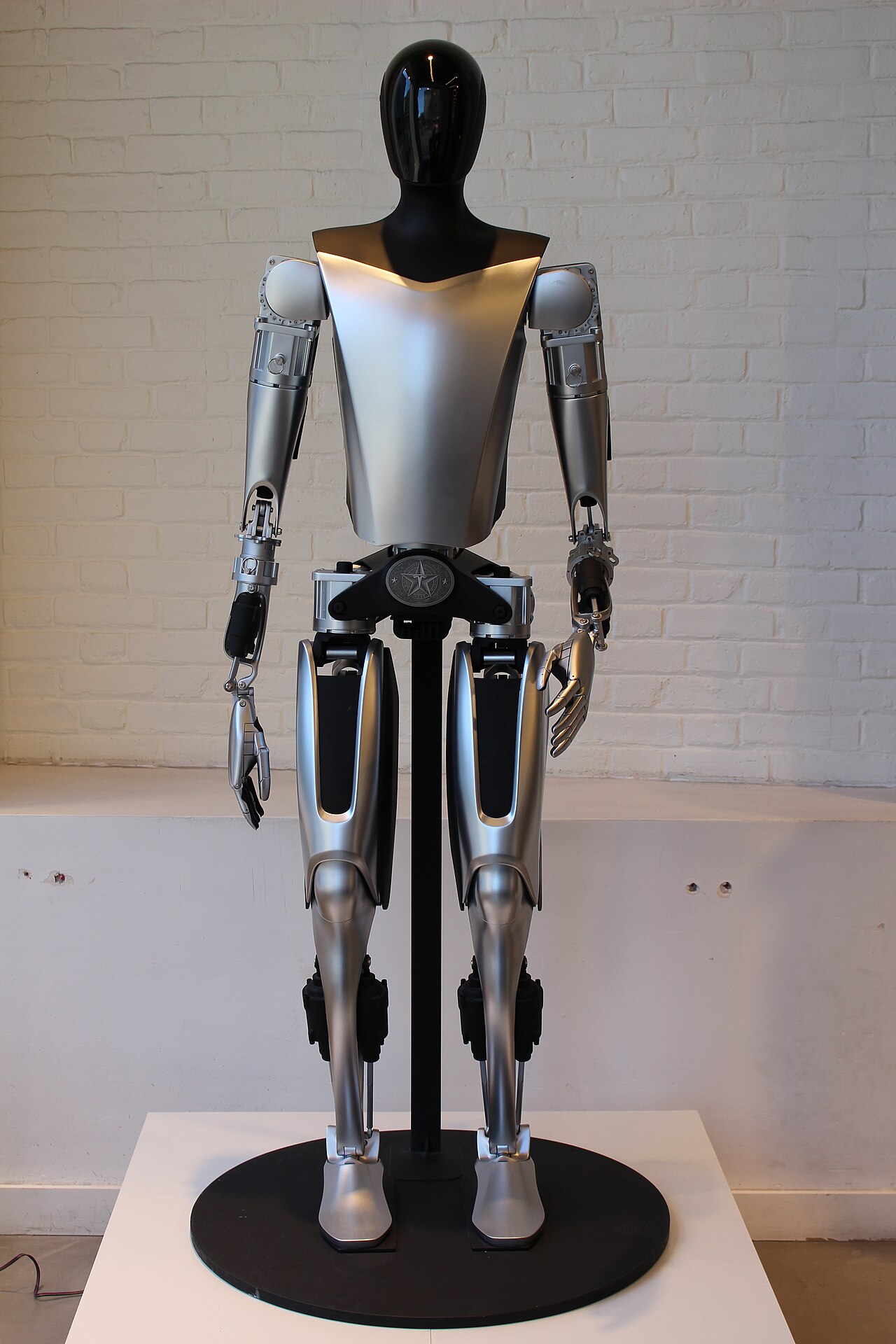
Tesla has started building Optimus humanoids in former EV production space at its Fremont, California plant, calling them its first production-quality units. Elon Musk expects a slow ramp and says the target is 20,000 robots per week by the end of 2027. Spending on Optimus, AI and autonomy helped cut quarterly net income 43% to $787 million.
· TechCrunch · Photo: Ulkl, Public domain
Robotiq has introduced the 2FC, a version of its 2F adaptive gripper that records pressure, vibration, force and position data and processes it at the wrist to detect slip and check grasp quality. It comes in 85 mm and 140 mm strokes, is rated for 2 million cycles and ships in Q1 2027; current 2F owners can upgrade with add-on sensors.
· Robotics Tomorrow
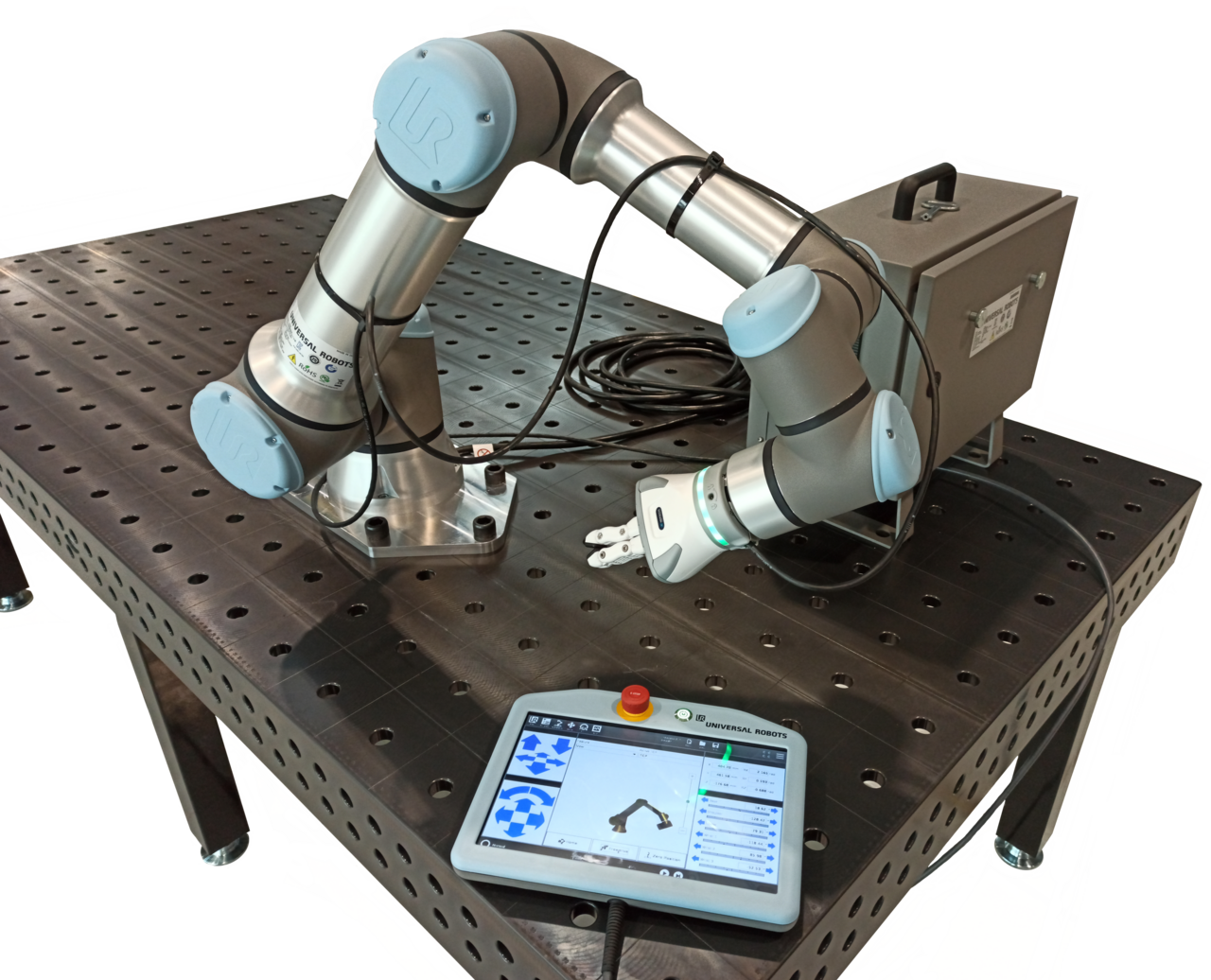
Teradyne Robotics and Stuttgart-based Sereact have formalised a partnership that pairs Sereact's Cortex vision-language-action model with dual-arm setups built from Universal Robots cobots. The companies say hundreds of these systems already work at European customer sites, including CEVA Logistics lines that process returned clothing for Zalando in Germany and Poland.
· Robotics Tomorrow · Photo: Auledas, CC BY-SA 4.0
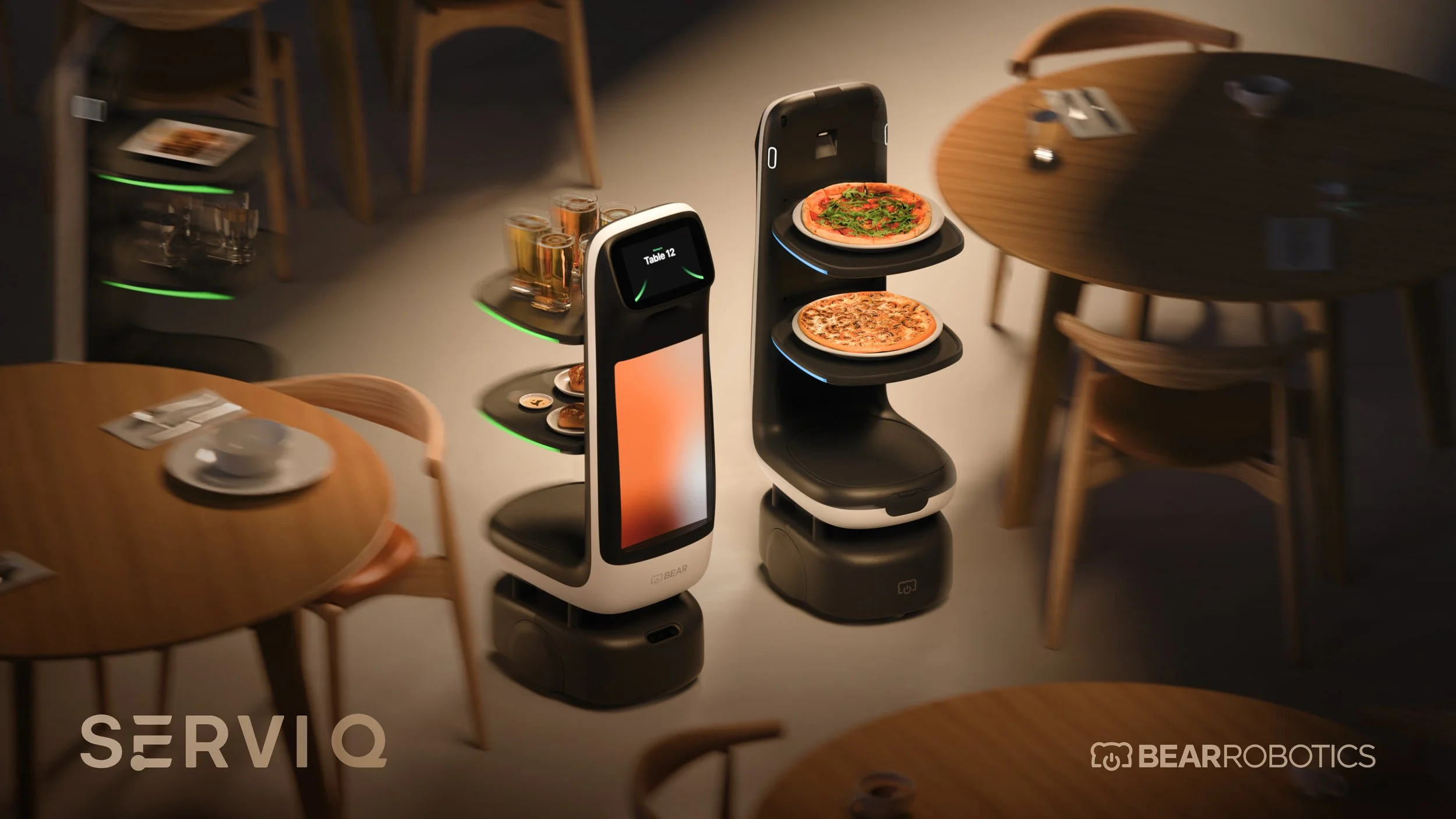
Bear Robotics has launched KINO-2, a platform that trains manipulation skills for its KR1 humanoid from task demonstrations, using NVIDIA Jetson AGX Thor, Isaac OS and GR00T. The company, which says it has over 16,000 robots at more than 5,000 sites, is piloting the system on supermarket returns and warehouse crate handling.
· Robotics Tomorrow · Photo: Bear Robotics, Press photo
Atlanta security startup Undaunted, founded in January 2025, says it now has more than 100 remotely supervised patrol robots in service at apartment complexes and other properties around metro Atlanta. The company combines the robots with existing cameras and live monitoring, and is preparing to expand to Houston and Dallas-Fort Worth.
· Robotics Tomorrow
Genoa-based Generative Bionics, maker of the GENE.01 humanoid, plans a network of three facilities where robots collect industrial task data that feeds digital twins and model training. The first hub, a 5,000 m² site in Italy, is due to open by Q4 2027, with AMD Helios rack-scale systems providing the computing.
· Humanoid Robotics Technology
Unitree has introduced the H2-X, a version of its H2 humanoid aimed at patrol, personal protection and rescue work. The company claims up to about eight hours of endurance without saying under what conditions, and its promo video shows martial-arts moves and a staged vehicle rescue. No price, datasheet or release date has been announced.
· Gadget Review · Photo: Sayanesy, CC0
HD Hyundai Robotics is presenting an upper-body humanoid with two arms and five-fingered hands, driven by its own robot foundation model, at ROBEX in Daegu. The company plans to use it first for kitting parts, then for welding and painting, and later to mount it on a wheeled base, with walking as a long-term goal.
· Humanoid Robotics Technology