Robotics news
Short summaries of what matters in robotics, each linking to its original source, plus our own interviews and features. Have a story?
Stories
Lausanne-based Embodied AI presented AIR at Humanoid Europe 2026, a wheeled humanoid built in nine months whose lightweight tendon-driven arms yield on contact. Each task starts under human teleoperation and the recorded runs train its AI, usually reaching autonomy within a month. AIR is being tested with manufacturers, with CE marking planned for 2027.
· Robotics Tomorrow
A team at the Shenzhen Institute of Advanced Technology has built a flexible hip exosuit that assists both flexion and extension underwater to counter water resistance. In trials reported in Science Robotics, breathing gas consumption per minute fell 29.77% for flutter kicks, 25.7% for frog kicks and 18.35% when walking on the bottom.
· heise online
Alongside its third-quarter results, sidewalk delivery robot maker Serve Robotics introduced Physical AI Services, a business line that offers other companies the tools it built for its own fleet. They include Serve Link, which connects field robots to data-center AI models, a tool that finds edge cases in robot data, and a data catalog for foundation models. Bedrock Robotics is a customer.
· TechCrunch
China's foreign investment security review office has prohibited SoftBank Group's $5.375 billion acquisition of ABB Robotics in the country, reportedly over fears that robot data could be sent abroad to train AI models. ABB confirmed the decision and says both companies are still in talks on the deal. China is a key market for ABB, which builds most robots for Chinese customers in Shanghai.
· The Robot Report
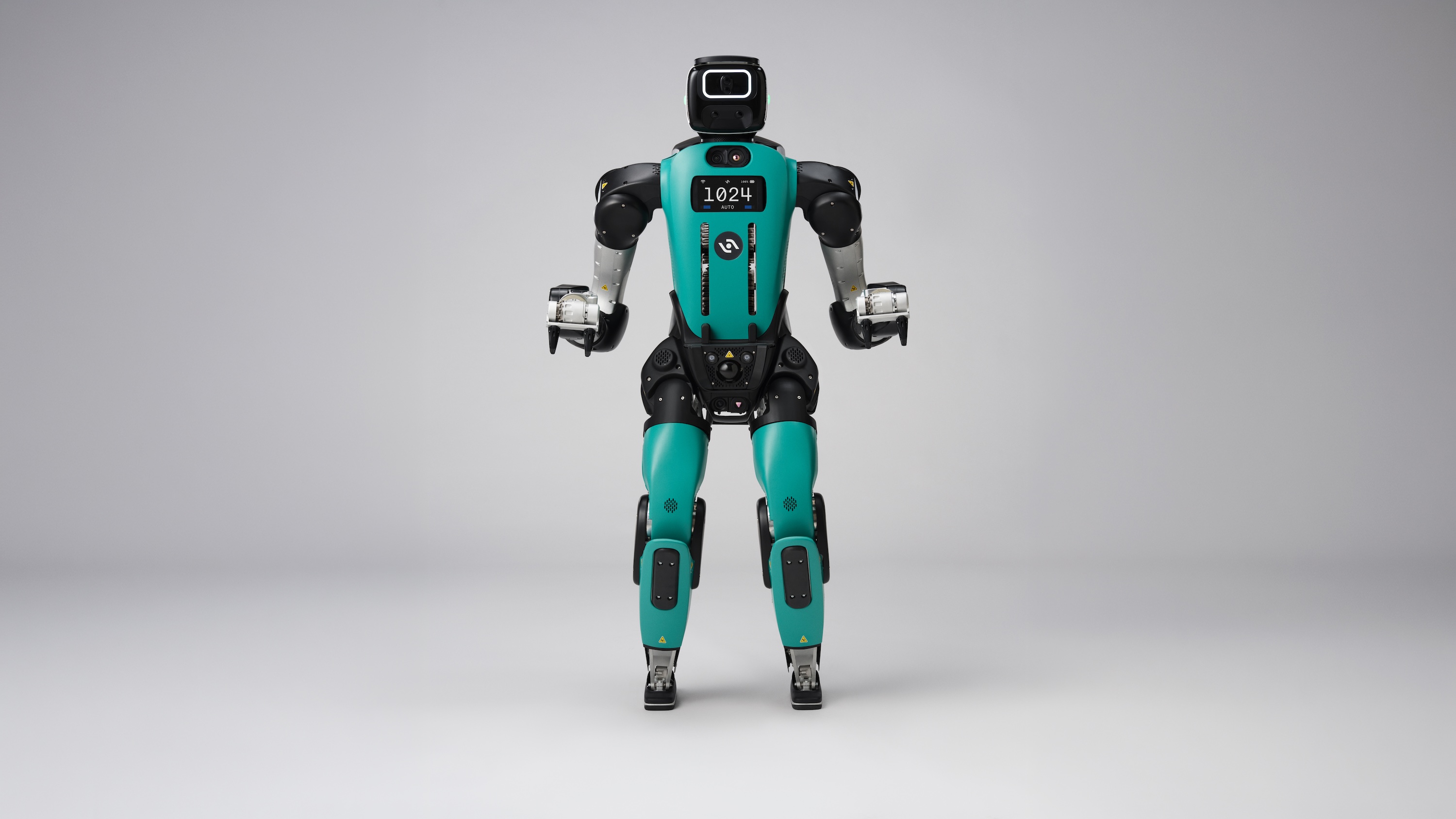
Humanoid maker Agility Robotics began trading on Nasdaq under the ticker AGLT on November 5, after completing its merger with Churchill Capital Corp XI. The deal and related financings bring about $465 million in gross proceeds, including a $201 million PIPE led by Foxconn. Agility reports more than $300 million in multiyear Digit 5 orders, with first deliveries expected in 2027.
· The Robot Report · Photo: Agility Robotics, Press photo
Researchers at the University of Tartu and the Italian Institute of Technology built a 3D-printed moth robot whose internal veins carry about 3 ml of fluid containing pyrrole. Under UV light and a stencil, the fluid turns into conductive polypyrrole in a wing patch, creating a UV sensor that triggers an LED or wing flaps. The work, in Advanced Science, points to robots adding sensors in the field.
· New Atlas
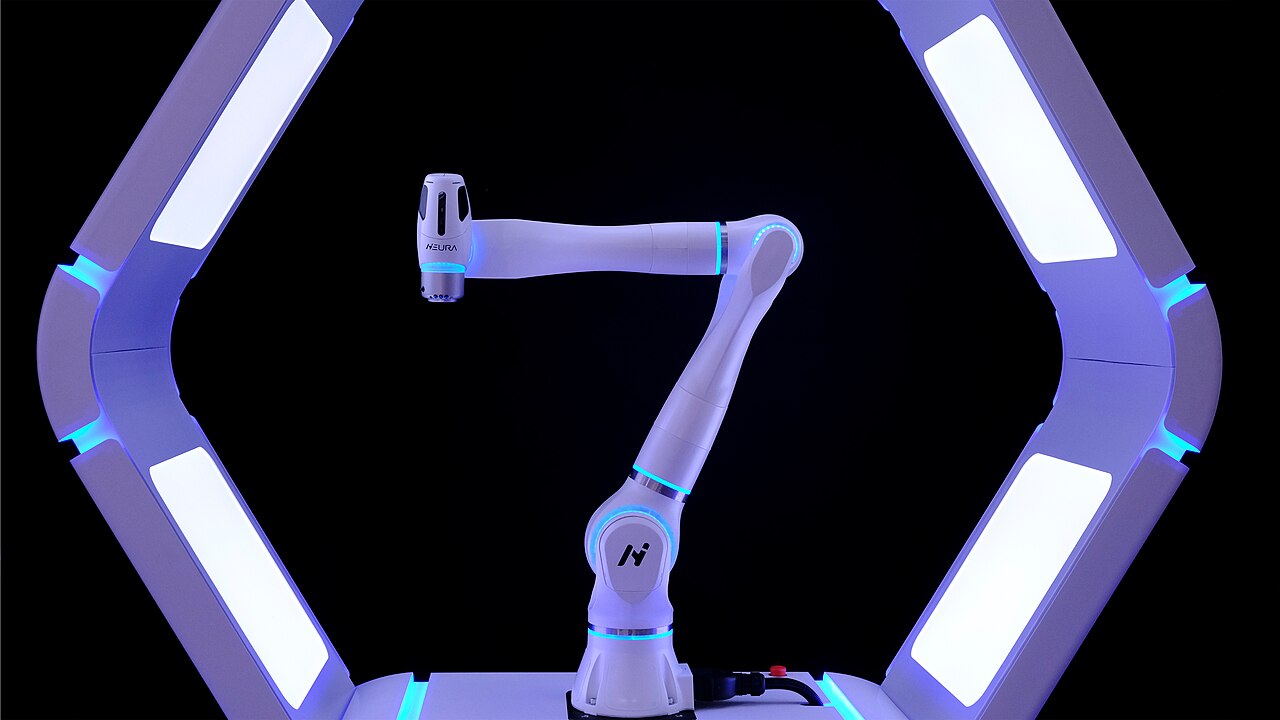
NEURA Robotics is working with E.on and EnviaM to develop humanoid robots for inspecting and monitoring substations and other grid sites, aiming to ease Germany's skilled-labor shortage. The 4NE1 will first learn tasks from workers' demonstrations at TUM's RoboGym near Munich, and grid operator Mitnetz Strom expects first field experience during 2027.
· heise online · Photo: Anna Schneider2021, CC BY-SA 4.0
MIT researchers led by Luca Carlone developed UQ-DAAAM, which scores how reliable a vision-language model's description of an object is by checking its confidence and consistency across viewpoints, then picks extra views when needed. It resolved ambiguity for about 92% of objects with two more captions each and improved description accuracy by 5%. The work will be presented at NeurIPS.
· MIT News
University of Toronto researchers designed a wider, spiked foot pad with rubber-band return springs for the Hopcopter, a one-legged hopping quadcopter from City University of Hong Kong and HKUST. Tests on ice, sand and rocks showed 84% less performance variation across terrains. The team is commercializing the design as Hop-1, aimed at search and rescue and remote inspection.
· New Atlas
Austrian warehouse automation company KNAPP has set up KNAPPRobotics.ai Inc. with a lab in Somerville, Massachusetts, to develop AI-driven robots for logistics tasks such as piece picking, bin picking and cycle counting. The site is expected to have 30 to 35 staff by early 2027, about 20 of them in software development, led by CEO Wolfgang Toferer.
· Mobile Robot Guide
ABB Robotics has made RobotStudio HyperReality, its simulation tool developed with Enodo Robotics that it says matches real robot behavior with 99% accuracy, available to all 60,000 RobotStudio users. At NVIDIA GTC Berlin it also announced a certified physical AI training program built with NVIDIA that combines RobotStudio and Omniverse.
· Robotics Tomorrow
Palo Alto startup SYNCERE has raised an $11 million pre-seed round led by a16z Speedrun, with Draper Associates among other backers. Its first product, LUME, is a floor lamp priced from $2,699 that also folds laundry, tidies up and makes beds, gaining skills through software updates. The money will speed up deliveries and scale manufacturing.
· Robotics Tomorrow
Physical AI startup LiberAI, founded in December 2025, has launched Liber-0, a world action model whose pretraining used over 2.2 million hours of recorded human activity, mostly video plus hand motions captured with data gloves. In the company's zero-shot tests across 60 tasks it reached a 36 percent success rate, and glove data sharply improved manipulation beyond pick-and-place.
· Robotics & Automation News
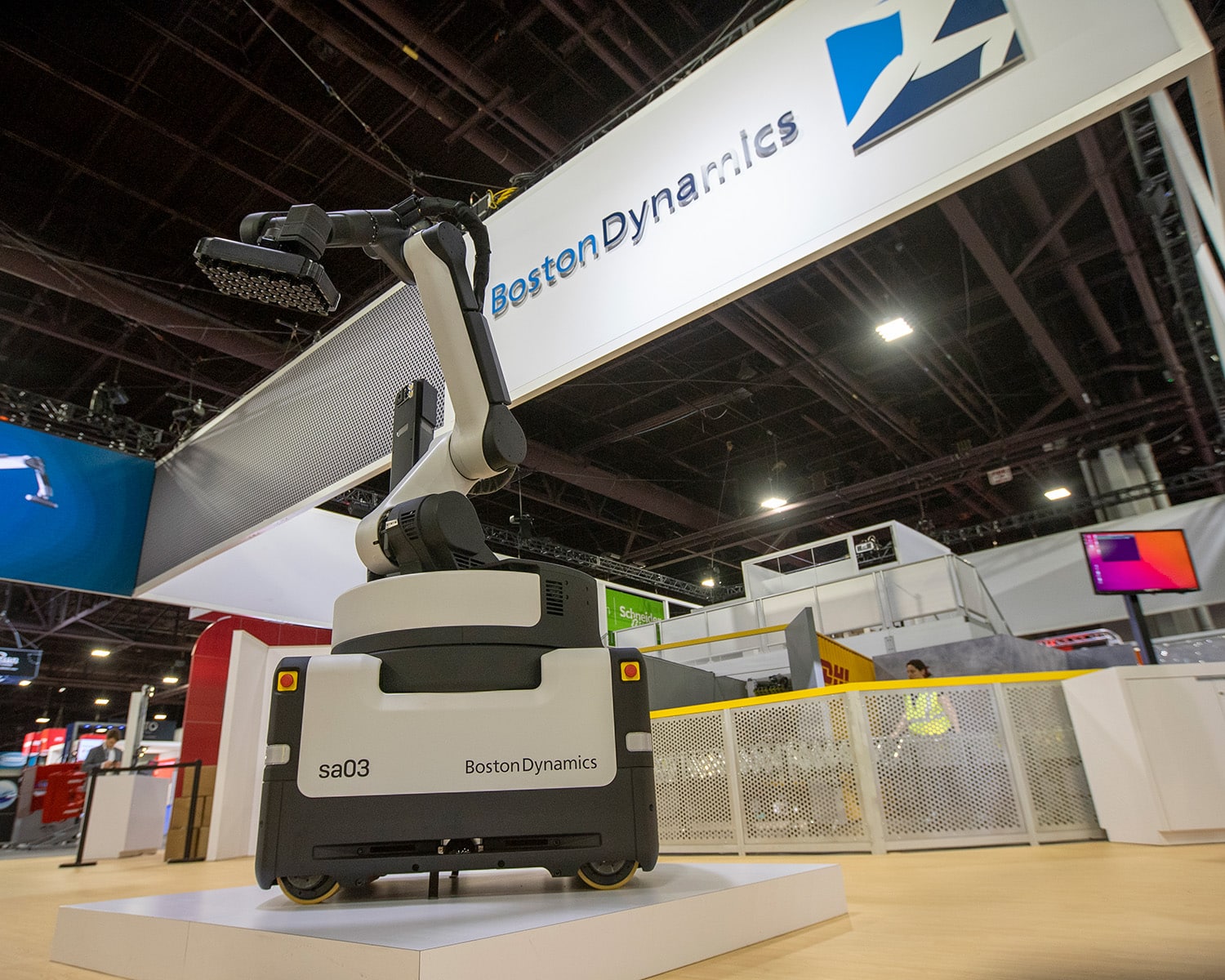
Boston Dynamics has introduced the second generation of Stretch, its case-handling robot for unloading trucks and containers. Drawing on more than 100,000 hours of field operation, the redesign cuts internal cabling by 81 percent, adds a revised gripper and continuous-rotation joints, and lets a drive module be swapped in about an hour instead of a full day. It handles up to 1,000 cases per hour and runs two shifts per charge.
· Robotics Tomorrow · Photo: Boston Dynamics, Press photo
Researchers at UCLA and UC Davis have built an insect-sized flying robot made entirely of polymer, with flexible wings driven by an electrically actuated soft muscle. The 185 mg prototype lifts three times its weight and kept flying after being swatted and loaded with 11,000 times its own mass, according to a Science Robotics paper. It still relies on external power; the team sees uses in inspection and search and rescue in tight spaces.
· heise online
Churchill Capital Corp XI investors backed the merger with Agility Robotics on November 2, with more than 84% of votes in favour. The deal values the Digit maker at $2.5 billion before new money and should bring in about $465 million, including a Foxconn-led PIPE. The combined company is expected to list on Nasdaq as AGLT.
· The Robot Report · Photo: Agility Robotics, Press photo
Watertown, Massachusetts-based Tutor Intelligence, an MIT CSAIL spinout, has closed a $75 million round, taking its total funding to $117 million. It rents out picking robots backed by remote human operators, charging per hour or per pick, and will use the money to train its robot foundation model and build more Sonny and Cassie units. It expects over 1,000 robots under contract by the end of 2027.
· The Robot Report
A3 has announced ISO 21423:2026, drawn up by ISO technical committee 299, which defines how industrial mobile robots, fleet managers and other equipment share data such as position, speed, status and tasks. It also covers links to lifts, automatic doors, ERP software and tended machines, so mixed fleets can operate in one plant with fewer path conflicts. A3 says it is the first non-safety robot standard it has helped produce.
· Robotics & Automation News
On October 26 a Starship-built robot delivering for Bolt crossed a central Tallinn street against a red light, forcing a city bus to brake hard; nine standing passengers were hurt. Estonian police are investigating. Starship blamed glare from a lit advertisement and denies the robot fled, and the case raises questions about liability for autonomous machines in the EU.
· Xataka
According to The Information, Meta has developed a household humanoid named Max together with Chinese robot maker Fourier, a roughly 1.5 m, 48 kg machine running on Nvidia Jetson AGX Thor, with a second version already in development. Meta told heise the robots are an internal research project and that it has no plans to sell them.
· heise online