AI news
Short summaries of what matters in robotics, each linking to its original source, plus our own interviews and features. Have a story?
Stories
Kardex has released BinInductAI, a camera and AI system that checks each bin at the AutoStore induction port for damage, wall and pickup-hole condition and barcode readability, and blocks duplicates. Operators no longer scan bins first, and Kardex claims on-site induction time drops by up to 30%.
· Mobile Robot Guide
Maxinsights, which pays contractors to film themselves doing household and workplace chores, closed a $30 million seed round led by PeakXV. The company says it has captured more than 2 million hours of activity for over 30 customers and is building a sensor glove with Genesis AI to record force and touch data.
· Robotics & Automation News
Luxonis has added the OAK 4 FFC to its OAK 4 family, a board-level vision computer that links up to five camera modules placed wherever a robot builder wants and handles stereo depth and AI on its 52 TOPS processor. The Developer Kit costs $849 and ships from November, while the $729 Barebone version follows in Q1 2027.
· Robotics Tomorrow
ABB Robotics has added its AI Robot Trainer, with pre-trained vision models for clothing, to the Fashion Inductor module used in fashion logistics, plus a new digital twin linked to RobotStudio. ABB says integrators can cut engineering and commissioning work by up to 75% and reach up to 1,300 items per hour per cell, and plans to extend the approach to more vision applications through Q1 2027.
· Robotics Tomorrow
Stereolabs, part of Ouster, has launched the ZED Box 2 Series of industrial edge AI computers for mobile robots, humanoids and machine vision. The base model uses a Jetson Orin NX, while the ZED Box 2 Max uses Jetson Thor and takes up to eight synchronized GMSL2 cameras. Shipping starts in October and late November 2026.
· Robotics Tomorrow
Omron will pay $675 million in cash for Vermont-based OnLogic and its parent Interlogic, with closing expected around January 2027 pending approvals. OnLogic, which had 2025 sales of $154.2 million, keeps its brand and headquarters. Omron plans to pair its edge computers with its own control, motion and robotics products for physical AI applications.
· Robotics & Automation News
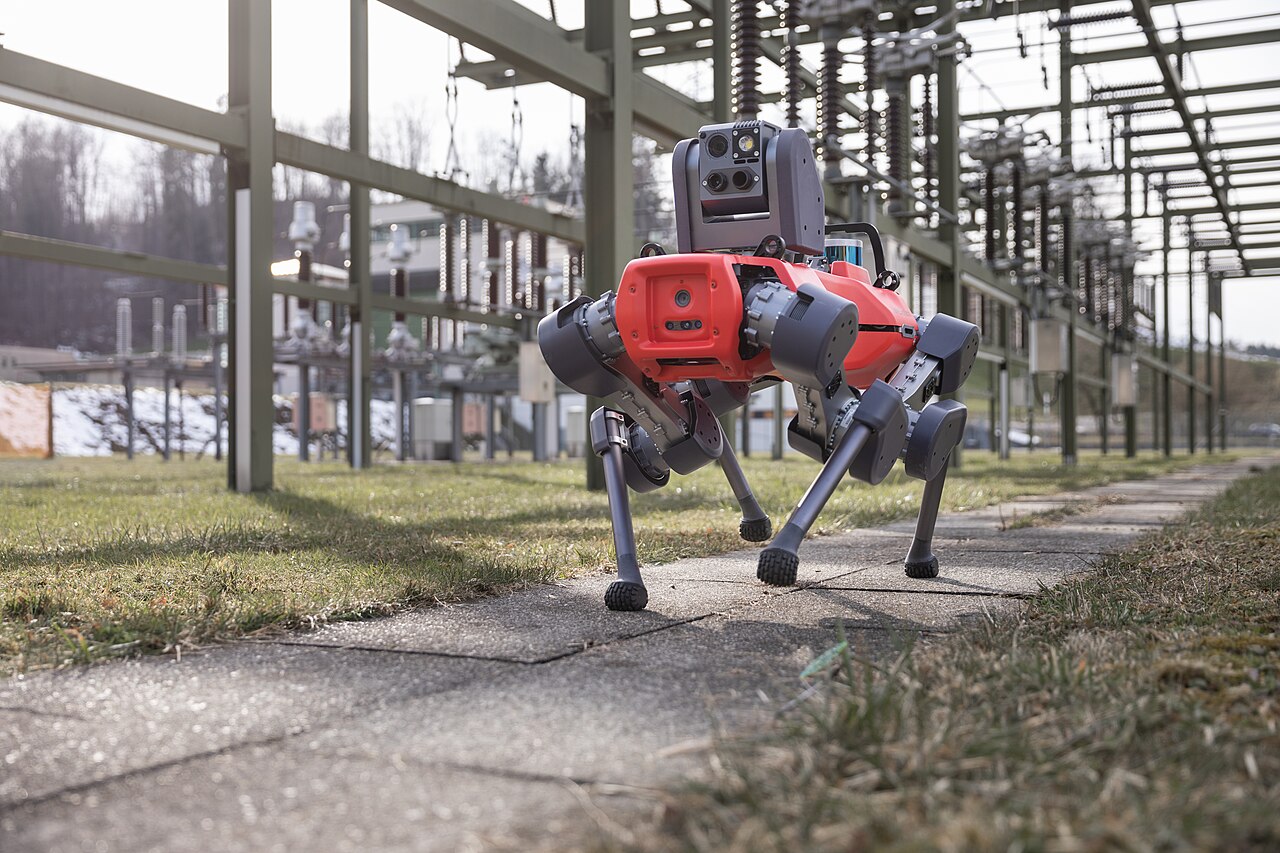
Researchers at ETH Zurich's Robotic Systems Lab got an ANYmal-D to solve an oversized 4.6 kg Rubik's Cube using its front legs while balancing on its hind legs. The robot scans the cube with its camera, plans about 30 moves with a solver and uses a reinforcement-learned balance policy; each of three runs took eight to nine minutes, showing legged robots can manipulate objects without arms.
· heise online · Photo: Cvoellmy, CC BY-SA 4.0
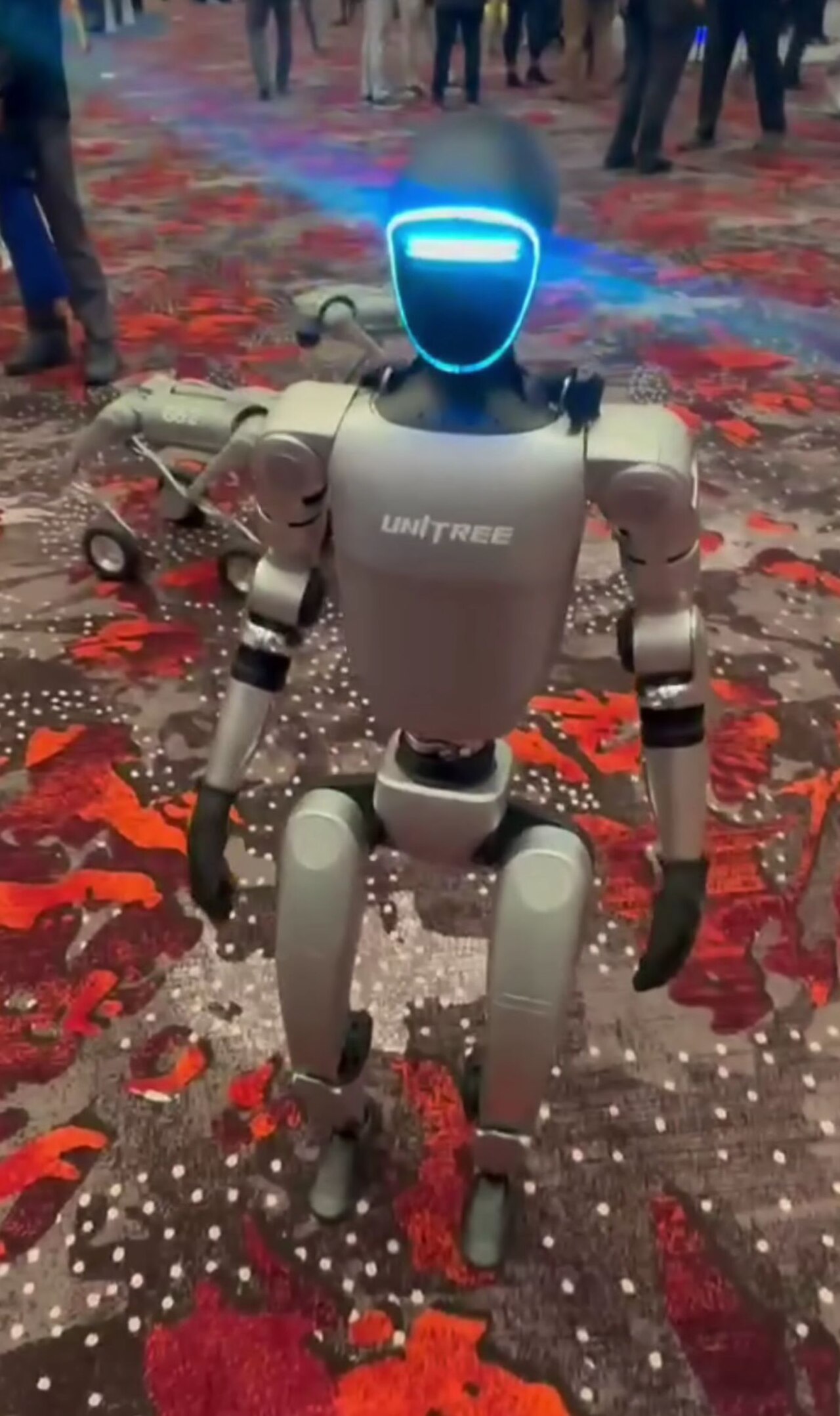
At its physical AI conference in Hangzhou, Unitree founder Wang Xingxing presented Rehearsal, a system in which AI agents review research, write control code, test it in simulation and check the best results on real robots. Unitree calls the approach a priority to speed up skill development, though it remains a proof of concept with no published results.
· Xataka · Photo: Sayanesy, CC0
Google DeepMind showed its new Gemini 4 Argon model watching a video of a person playing cornhole, building a simulation of the task and passing the learned motion to Apptronik's Apollo humanoid, which then landed seven throws in a row. Google says the video-to-simulation pipeline can shrink weeks of manual setup to a few hours.
· Robotics & Automation News
Former OpenAI science lead Kevin Weil has launched Warp Sciences, which raised $215 million at an $865 million valuation in a round led by Lightspeed. Chemists wearing cameras and sensor gloves will teach robots to synthesize and test compounds around the clock, work that biotech firms often outsource abroad.
· TechCrunch
Dream Labs closed a $90 million seed round led by B Capital and Kindred Ventures and launched a public API that turns a robot's camera feed and plain-English instructions into motor commands. The company says its Dream-1 model, trained on videos of everyday human tasks, runs on robots from different makers costing about $2,000 to $10,000.
· The Robot Report
Robotiq has introduced the 2FC, a version of its 2F adaptive gripper that records pressure, vibration, force and position data and processes it at the wrist to detect slip and check grasp quality. It comes in 85 mm and 140 mm strokes, is rated for 2 million cycles and ships in Q1 2027; current 2F owners can upgrade with add-on sensors.
· Robotics Tomorrow
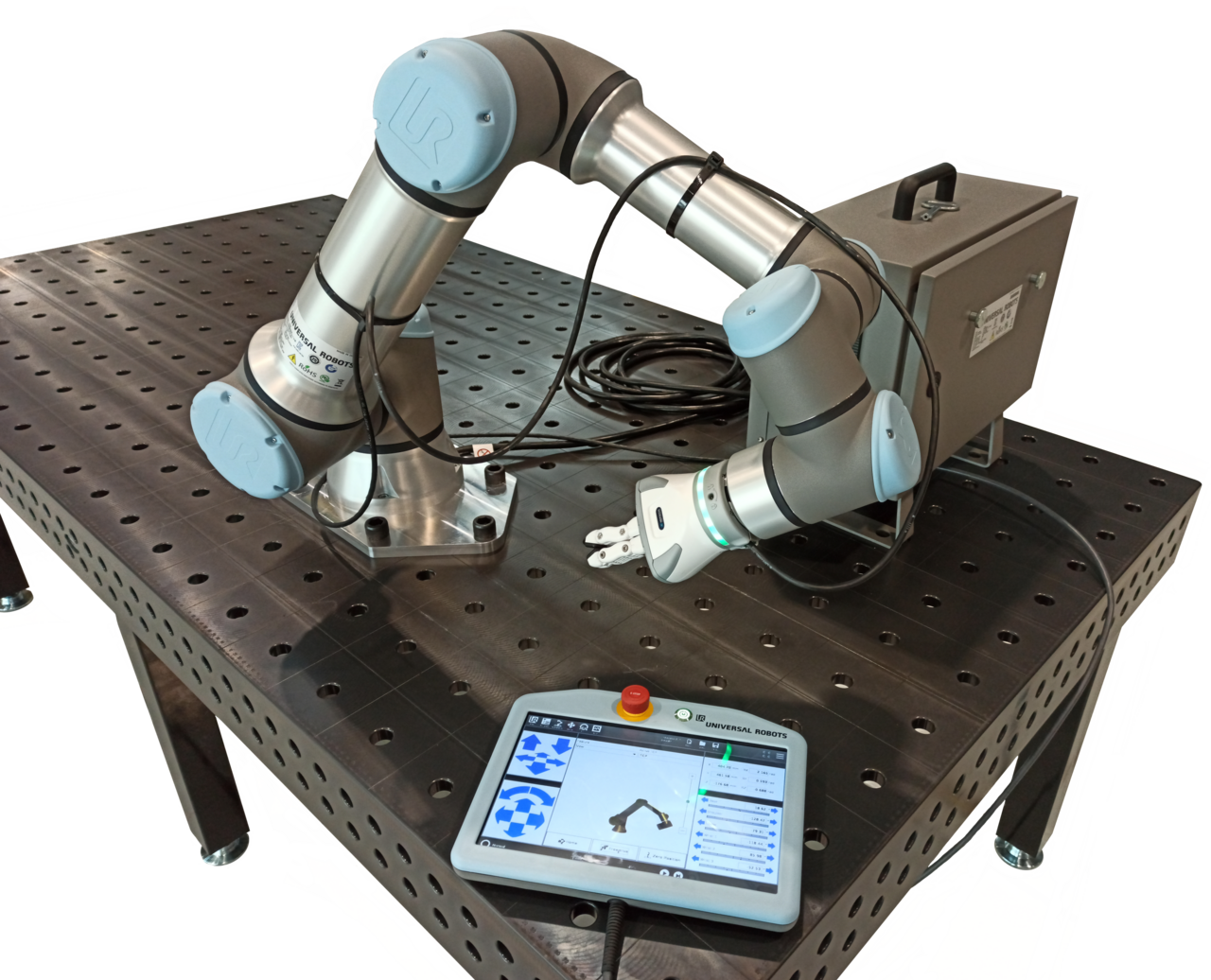
Teradyne Robotics and Stuttgart-based Sereact have formalised a partnership that pairs Sereact's Cortex vision-language-action model with dual-arm setups built from Universal Robots cobots. The companies say hundreds of these systems already work at European customer sites, including CEVA Logistics lines that process returned clothing for Zalando in Germany and Poland.
· Robotics Tomorrow · Photo: Auledas, CC BY-SA 4.0
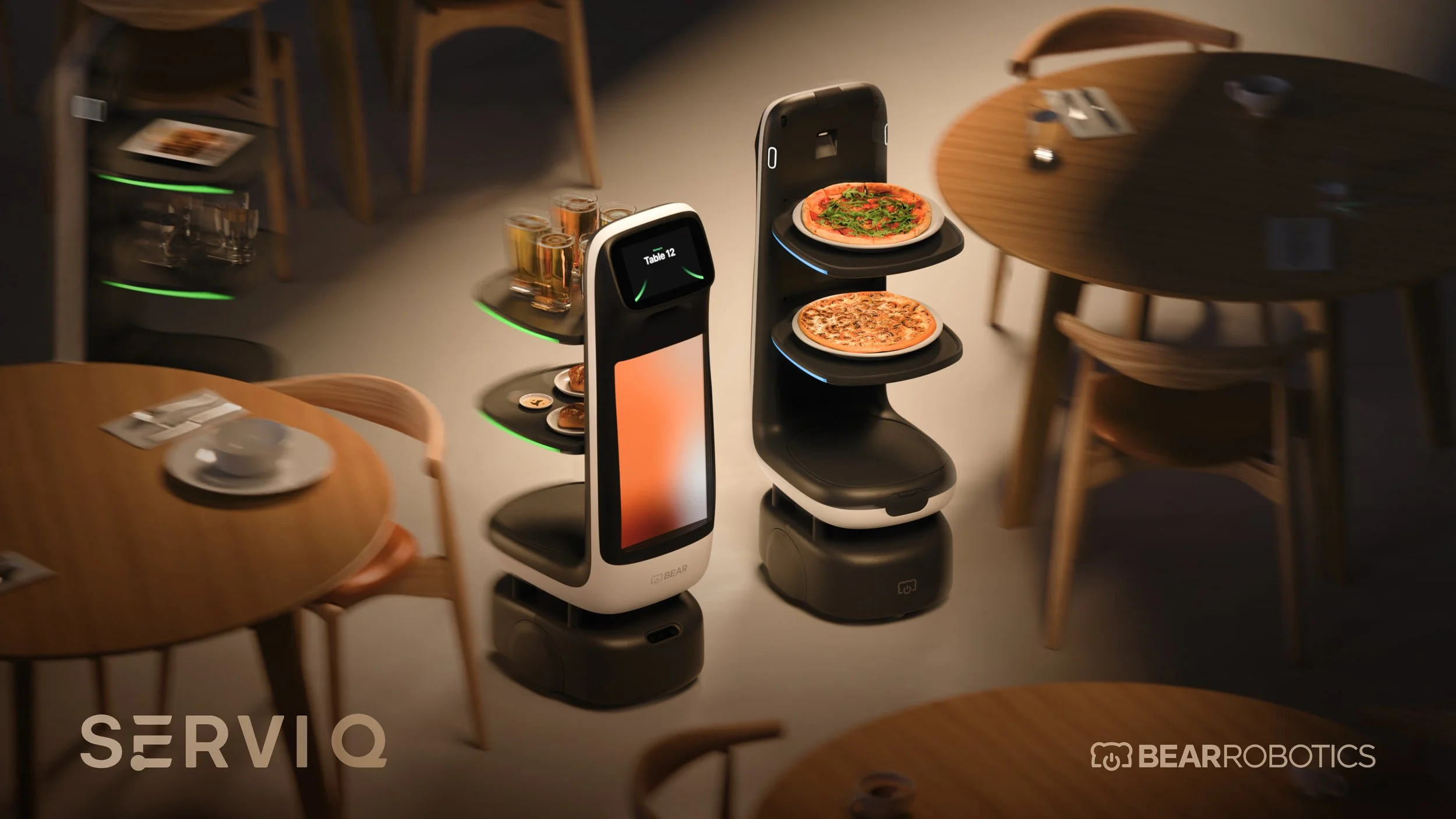
Bear Robotics has launched KINO-2, a platform that trains manipulation skills for its KR1 humanoid from task demonstrations, using NVIDIA Jetson AGX Thor, Isaac OS and GR00T. The company, which says it has over 16,000 robots at more than 5,000 sites, is piloting the system on supermarket returns and warehouse crate handling.
· Robotics Tomorrow · Photo: Bear Robotics, Press photo
Genoa-based Generative Bionics, maker of the GENE.01 humanoid, plans a network of three facilities where robots collect industrial task data that feeds digital twins and model training. The first hub, a 5,000 m² site in Italy, is due to open by Q4 2027, with AMD Helios rack-scale systems providing the computing.
· Humanoid Robotics Technology
HD Hyundai Robotics is presenting an upper-body humanoid with two arms and five-fingered hands, driven by its own robot foundation model, at ROBEX in Daegu. The company plans to use it first for kitting parts, then for welding and painting, and later to mount it on a wheeled base, with walking as a long-term goal.
· Humanoid Robotics Technology
Eka Robotics, founded by MIT professor Pulkit Agrawal and former DeepMind researcher Tuomas Haarnoja, closed a $150 million Series A led by a16z and F-Prime. Its picking system pairs a force-sensitive gripper costing under $1,000 with a model trained largely in simulation, and the company says it handles about 1,500 objects an hour. It is running pilots with industrial customers.
· TechCrunch
KUKA has launched iiQKA.AI Vision, image processing software that lets integrators set up bin picking, assembly, quality inspection and depalletizing with drag-and-drop templates. It runs on the edge on KUKA's AI Extension Platform with an NVIDIA Jetson Orin module, keeping images on the device without a cloud connection.
· Robotics Tomorrow
Researchers at TU Delft's MAVLab described in Science Robotics how their autonomous MonoRace drone won the 2025 Abu Dhabi Autonomous Drone Racing Competition, defeating world champion Yuki Hashimoto in the final. It flew at up to 100 km/h with only an 8-megapixel camera, an inertial sensor and a neural network trained in simulation, without GPS or external tracking.
· t3n
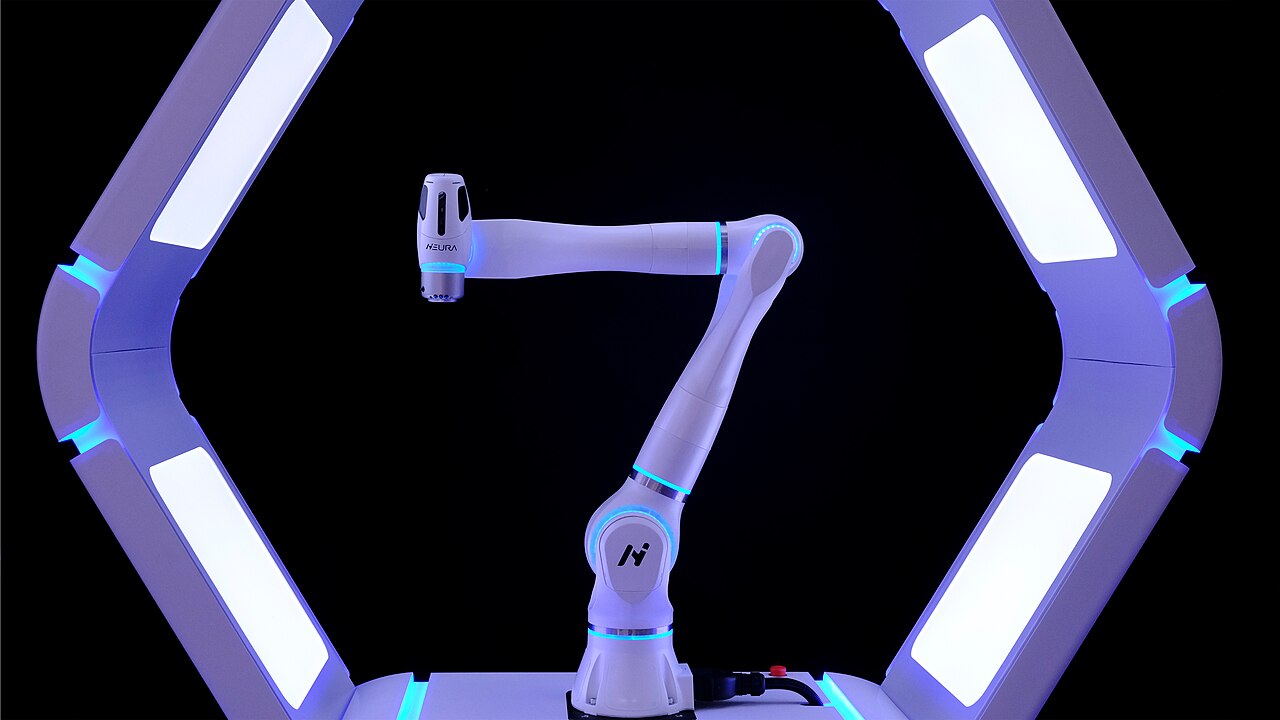
German company NEURA Robotics has introduced Neuron AI, a multimodal model that fuses vision, touch, audio, language and memory to control five of its robot embodiments. It is trained on real robot data, simulation and human demonstrations, and customers can fine-tune it for their own tasks through the Neuraverse platform.
· Robotics Tomorrow · Photo: Anna Schneider2021, CC BY-SA 4.0