Regulation news
Short summaries of what matters in robotics, each linking to its original source, plus our own interviews and features. Have a story?
Stories
The Association for Advancing Automation has released ANSI/A3 R15.08-3-2026, the third part of its industrial mobile robot safety series. It covers the user's side: risk assessment, change management, staff training and periodic inspections during daily operation, complementing Parts 1 and 2 on the robots and the systems built with them.
· Robotics Tomorrow
French company Wandercraft has received FDA authorization to sell Eve, a personal self-balancing exoskeleton that lets adults with spinal cord injuries stand and walk using a joystick. The device uses twelve motors, runs up to four hours and is limited to flat indoor floors with a trained caregiver present. In a clinical study of 16 user and caregiver pairs, all completed the benchmark tests.
· New Atlas
The US Federal Communications Commission granted ANSCER Robotics conditional approval under its Covered List rules for three of its mobile robots, the AR250, AR650 and AR1250, letting it continue imports and sales tied to supply chain security commitments. ANSCER and Husqvarna are among the first robot makers to receive this status.
· Robotics Tomorrow
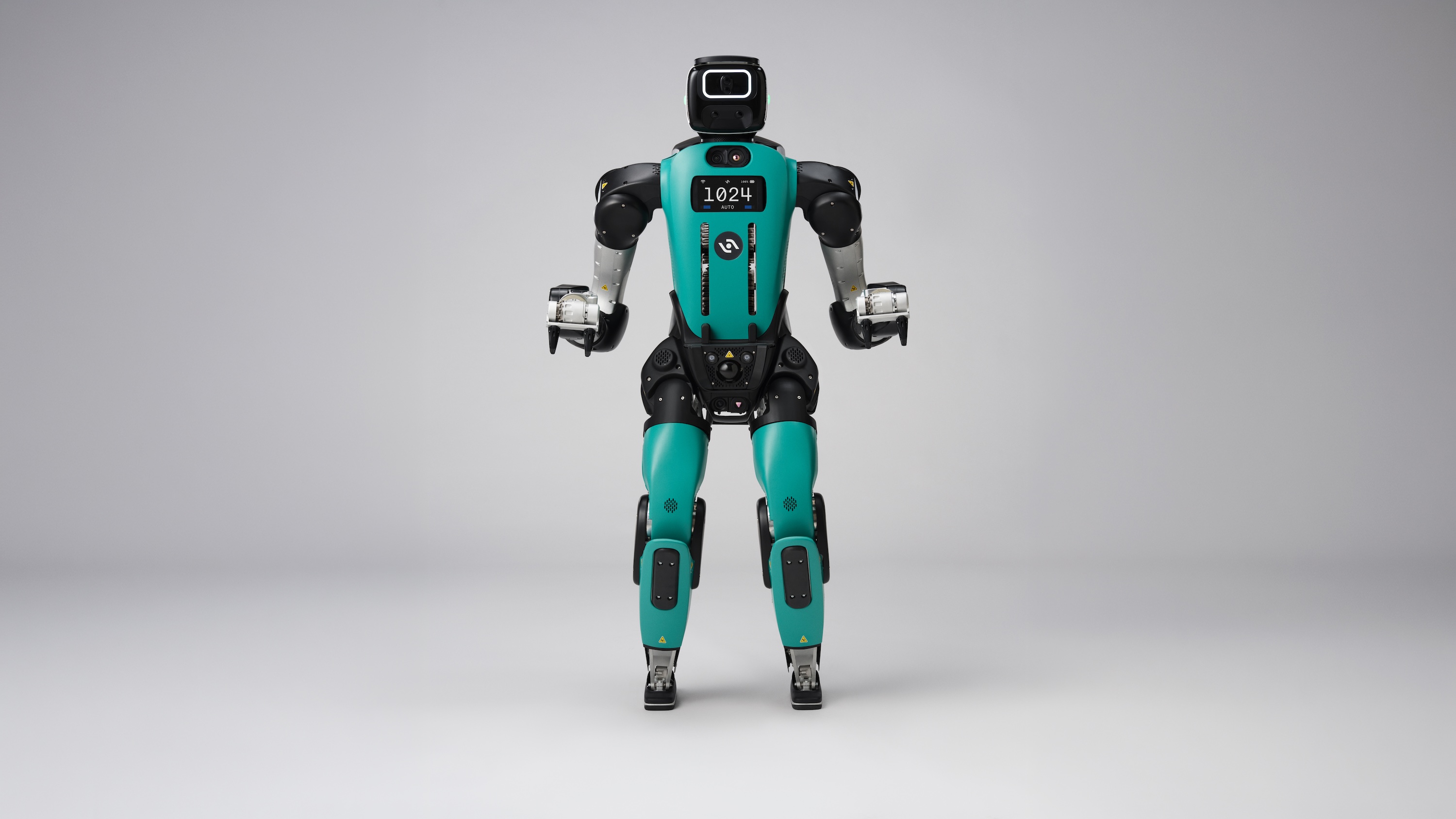
Agility Robotics is presenting Digit 5 as a humanoid built to share space with workers: it pauses, avoids hazards or sits down when people come close and is designed so it cannot fall onto them. The 129 kg robot lifts 23 kg to 2.1 m, has not yet been deployed in factories, and is expected in the EU and UK in 2027.
· IEEE Spectrum · Photo: Agility Robotics, Press photo
Dutch company Vitestro received FDA authorization on August 19, 2026 for Aletta, a robot that locates veins with near-infrared, ultrasound and Doppler imaging before inserting the needle. In a Dutch trial with over 1,600 people it succeeded on the first attempt 94.5% of the time. A European launch is planned for 2027, with the US to follow.
· IEEE Spectrum